
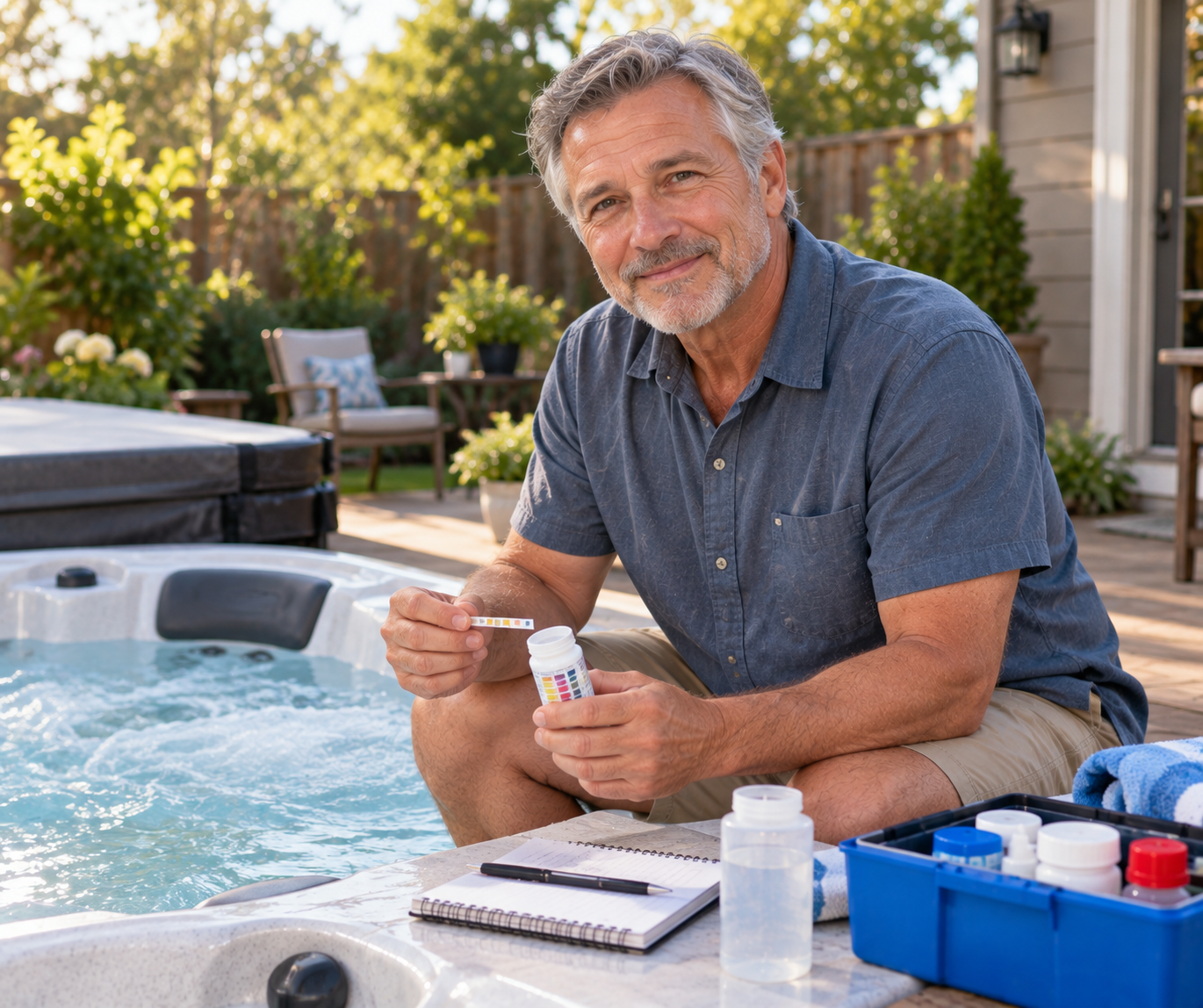

Stepping into a steaming spa after a long day offers unmatched physical relaxation, but managing water chemistry can sometimes feel unpredictable. Many spa caretakers test their water after a few days only to find their sanitizer residual has dropped to absolute zero. If you find yourself asking does chlorine evaporate from hot tub, the answer involves a mix of water thermodynamics, chemical reactions, and mechanical aeration. While water evaporates into steam, chlorine primarily disappears through chemical consumption and thermal dissipation rather than straightforward phase change.
Maintaining balanced sanitization protects bathers from harmful bacteria while preserving acrylic shells, heater elements, and plumbing seals from corrosive chemical shifts. When chlorine residuals vanish too quickly, water turns cloudy, biofilms take hold in internal manifolds, and pungent chloramine odors begin to form. Understanding how water temperature, sunlight exposure, and bather waste break down sanitizer allows you to maintain a steady residual with minimal effort. Using a well-sealed outdoor patio spa cover also plays a vital role in slowing thermal loss and preventing rapid chemical degradation when your tub sits idle between soaking sessions.




Understanding Chlorine Loss in Spa Water Chemistry
Active chlorine does leave your hot tub water, but the scientific reality is more nuanced than simple physical evaporation. When hot tub owners ask whether chlorine evaporates, they are usually observing a rapid decline in free available chlorine between maintenance routines. True evaporation involves a liquid changing phase into a vapor, whereas chlorine residual loss in a hot tub stems from chemical breakdown, biological oxidation, gas off-gassing, and ultraviolet photolysis. Hypochlorous acid, the active sanitizing agent formed when chlorine granules dissolve, reacts continuously with organic matter and degrades rapidly under high thermal stress.
Thermal Degradation and Water Temperature Impacts
Hot tubs typically operate at water temperatures between 100 and 104 degrees Fahrenheit, which creates a harsh environment for chemical sanitizers. By comparison, residential swimming pools rarely exceed 84 degrees Fahrenheit during summer months. Higher thermal energy accelerates molecular motion, causing hypochlorous acid molecules to dissociate at a significantly faster rate. This accelerated reaction velocity means sanitizer molecules break down naturally even when no bathers are present in the spa.
Heated water also encourages higher metabolic rates for any microbial contaminants that enter the vessel. Bacteria and organic pathogens replicate rapidly in warm aquatic environments, demanding immediate neutralization from available sanitizer. Because chlorine sacrifices itself during the oxidation process, high water temperatures deplete sanitizer reserves much quicker than cold water storage. Spa owners often notice that a chlorine dose lasting a full week in a cool pool disappears within forty-eight hours in a heated spa.
Stabilizing these thermal losses requires routine water testing and consistent sanitizer additions. Products such as AquaDoc Hot Tub Chlorine Granules dissolve rapidly in hot water to establish a dependable free chlorine baseline. Adding small, measured doses of granular sanitizer frequently produces far more stable sanitization than adding massive doses infrequently. This steady dosing approach prevents dramatic swings between over-chlorination and total sanitizer depletion.
Off-Gassing: The Difference Between Evaporation and Gas Escape
Evaporation specifically describes the transition of water molecules from liquid to gaseous vapor at the surface boundary. Chlorine dissolved in water exists primarily as aqueous hypochlorous acid and hypochlorite ions rather than a pure gas. However, chemical reactions and mechanical disturbance cause a portion of this dissolved chemical to convert into volatile gases, including trace chlorine gas and chloramine vapors. These volatile compounds escape the liquid surface through a process properly known as off-gassing.
High-pressure hydrotherapy jets, aeration venturi valves, and water features accelerate off-gassing dramatically. When pumps inject millions of tiny air bubbles into the water stream, the total surface area exposed to the atmosphere expands exponentially. This mechanical agitation physically strips volatile gases out of solution and propels them into the surrounding air. Running jets at high speed with the cover open will rapidly lower dissolved gas concentrations within thirty to sixty minutes.
Aeration also removes dissolved carbon dioxide from the water column, causing total alkalinity to stabilize while driving pH levels upward. As water pH rises above 7.8, hypochlorous acid converts into hypochlorite ions, which are far less effective at killing bacteria. This chemical shift makes the remaining sanitizer appear sluggish, leading many owners to believe the chlorine has vanished entirely when it has merely lost its sanitizing potency. Maintaining a strict pH range between 7.2 and 7.8 ensures that the active sanitizing form of chlorine remains dominant.
Bather Load and Organic Oxidation Demand
Bather load represents the single largest consumer of free available chlorine in any residential spa. Hot water opens skin pores and stimulates perspiration, releasing sweat, body oils, dead skin cells, and cosmetic residues into the water. Even clean bathers carry residual laundry detergents, body lotions, and hair products that immediately react with dissolved sanitizers. In a compact 400-gallon spa, two soaking adults place an organic demand on the water equivalent to dozens of swimmers in a standard 20,000-gallon pool.
Free chlorine molecules attack these organic contaminants through direct chemical oxidation. During this reaction, the chlorine molecule binds to ammonia and nitrogen compounds, transforming from free chlorine into combined chlorine. These resulting compounds, called chloramines, possess virtually no sanitizing power and produce the harsh chemical smell often mistakenly blamed on excessive chlorine. When test strips indicate zero free chlorine after a social soak, the chemical did not evaporate; it was fully consumed while neutralizing bather waste.
Managing heavy bather load requires proactive chemical additions rather than reactive troubleshooting. Rinsing off in a shower before soaking removes a substantial portion of skin lotions and cosmetic residue before they enter the plumbing. Adding a measured maintenance dose of chlorine granules immediately following a soak replenishes the sanitizer bank before bacteria can multiply. Regular post-soak dosing prevents water cloudiness and stops biofilm from establishing footholds inside flexible jet hoses.
Ultraviolet Radiation and Solar Photolysis
Direct exposure to sunlight destroys unstabilized chlorine through a photochemical process known as photolysis. Solar ultraviolet rays penetrate the water surface and break the chemical bonds holding hypochlorous acid together. Once separated, the chlorine atoms form inactive chloride ions that can no longer sanitize water or kill pathogens. An uncovered spa sitting in direct midday sun can lose up to ninety percent of its free chlorine residual in under three hours.
Outdoor swimming pools typically use cyanuric acid to protect chlorine molecules from ultraviolet degradation. In hot tubs, however, elevated cyanuric acid concentrations can cause a condition known as chlorine lock, where the sanitizer becomes chemically bound and unable to kill bacteria efficiently. Most hot tub service standards recommend keeping cyanuric acid levels moderate, which leaves spa chlorine naturally vulnerable to sunlight whenever the vessel remains uncovered. Relying entirely on chemical stabilizers in hot water often leads to over-stabilized water that requires an early drain and refill.
The simplest and most effective defense against ultraviolet loss is physical shading. Keeping a durable hot tub cover latched in place whenever the spa is not in active use completely blocks incoming ultraviolet radiation. Physical covers also halt natural water evaporation, which retains heat and keeps chemical concentrations stable. Removing the cover only when you intend to soak or ventilate chemical vapors protects your sanitizer investment and prevents midday sunlight from stripping your water clean of protection.
How to Safely Lower Excessively High Chlorine Levels
Over-chlorination frequently occurs when caretakers miscalculate gallon capacity or add repeated shock treatments to clear stubborn cloudiness. Safe soaking conditions require free chlorine levels between 3 and 5 parts per million, with 10 parts per million representing the absolute upper safety threshold. Soaking in water with elevated chlorine causes skin redness, itchy rashes, burning eyes, and premature degradation of swimsuit elastic. High sanitizer concentrations also corrode acrylic surfaces, pillow headrests, and stainless steel heater element sheaths over prolonged contact periods.
Natural dissipation through off-gassing and aeration provides one method for reducing elevated chemical readings. Removing the cover, opening air controls, and running the jet pumps continuously encourages volatile chlorine gases to leave the water surface. Depending on starting concentrations and ambient temperatures, this natural dissipation process can take anywhere from twelve to forty-eight hours to drop chlorine into a safe soaking range. However, waiting for natural dissipation leaves your spa vulnerable to airborne debris while running pumps continuously increases electrical consumption.
When you need to restore balance quickly, chemical neutralization offers a rapid and controlled alternative. AquaDoc Chlorine Neutralizer for Pools & Hot Tubs utilizes a sodium thiosulfate formula that reacts immediately with free and combined chlorine. Sodium thiosulfate converts active chlorine into harmless dissolved salts without disrupting calcium hardness or damaging spa plumbing manifolds. Careful incremental dosing based on test strip readings allows you to drop sanitizer levels safely within twenty to thirty minutes, restoring comfortable water balance without draining hundreds of gallons.
Non-Chlorine Shock Versus Chlorinated Shock Applications
Shocking a hot tub eliminates organic waste and breaks apart irritating chloramines, but choosing the right oxidizer determines whether your chlorine level rises or remains steady. Potassium monopersulfate, found in formulas like 2LB Chlorine-Free Hot Tub Shock Oxidizer and AquaDoc Non Chlorine Hot Tub Shock, provides powerful oxygen-based oxidation without adding any free chlorine to the water. This non-chlorine shock oxidizes oils, cosmetics, and bather waste, freeing existing chlorine to focus on bacterial disinfection.
Chlorine-based shock treatments operate through a process known as breakpoint chlorination. Products like SpaGuard Enhanced Shock deliver concentrated available chlorine alongside clarifiers and pH buffers to actively destroy chloramine bonds through overwhelming chemical force. Breakpoint chlorination requires adding enough free chlorine to reach ten times the measured combined chlorine level, which temporarily spikes your sanitizer residual. This method is ideal when water turns visibly dull, green, or cloudy, or when a major contamination event occurs.
Routine weekly maintenance typically benefits from alternating between these two chemical treatments based on test results. If free chlorine remains in the optimal 3 to 5 parts per million range but the water exhibits a faint chemical odor, an oxygen-based shock oxidizes the problem without elevating chemical ppm. If free chlorine tests near zero and the water looks hazy, a chlorinated shock provides both immediate oxidation and a fresh sanitizing residual. Understanding this distinction prevents accidental over-chlorination while keeping the water crystal clear and odorless.
Protecting Spa Components from Corrosive Off-Gassing
Off-gassing creates a highly corrosive microclimate directly beneath the spa cover if vapors cannot escape freely. When oxidizers and chlorine granules react in warm water, volatile chemical vapors rise into the enclosed air space between the water line and the underside of the cover. This trapped gas combines with evaporating steam to form an acidic condensation that clings to vinyl undersides, headrest pillows, and acrylic shell edges. Over time, acidic condensation bleaches marine vinyl, stiffens flexible headrests until they crack, and degrades plastic jet faces.
Thermal covers are particularly susceptible to chemical vapor damage when caretakers close the lid immediately after adding water treatments. Chemical fumes penetrate standard vapor barriers, attacking internal expanded polystyrene foam cores and breaking down cellular integrity. Once the foam core breaks down, it absorbs evaporating steam, becoming waterlogged, heavy, and functionally useless as an insulating thermal barrier. Protecting an investment in a foldable hot tub cover requires leaving the cover fully open for at least twenty minutes following any shock or chlorine addition.
Operating circulation pumps during this venting window ensures that chemical granules dissolve completely rather than settling on the acrylic floor. Undissolved granules resting against acrylic surfaces can cause localized bleaching, surface blistering, or delamination of fiberglass backings. Running low-speed jets distributes sanitizer evenly throughout internal plumbing lines, diverter valves, and heater chambers while allowing noxious gases to disperse safely into the outdoor atmosphere. Once twenty minutes pass and volatile vapors dissipate, securing the cover protects heat retention without risking chemical degradation.
Establishing a Reliable Sanitizer Maintenance Routine
Maintaining consistent sanitizer residuals prevents the frustrating cycle of mysterious chlorine loss followed by over-chlorination. Baseline water balancing begins with total alkalinity, which should remain between 80 and 120 parts per million to buffer water against rapid pH fluctuations. Once alkalinity is stable, adjusting pH between 7.2 and 7.8 optimizes chlorine efficiency and prevents scale accumulation on heater elements. Testing water balance twice weekly with reliable test strips provides an early warning system before minor chemical imbalances turn into severe water quality problems.
Regular filtration cycles play a crucial complementary role in maintaining clean water alongside chemical sanitizers. Cartridge filters capture physical debris, suspended organic matter, and oxidized particles, preventing them from consuming dissolved chlorine in the water column. Rinsing pleated filter cartridges with clean water every two weeks and soaking them in a degreasing filter cleaner monthly maintains proper pump flow rates. Unrestricted water circulation ensures that sanitizer circulates into every plumbing branch, eliminating dead zones where biofilm might otherwise flourish.
Consistent care transforms hot tub ownership from a chemical guessing game into an easy, predictable routine. Dosing small amounts of sanitizer after each soak, ventilating off-gassing vapors properly, and using non-chlorine oxidizers regularly keeps free chlorine levels dependable. When unexpected dosing errors occur, having a dedicated chlorine neutralizer on hand restores balance without delay. By mastering the environmental and chemical forces that drive sanitizer dissipation, you can maintain safe, crystal-clear water ready for therapeutic enjoyment every single day.


Write Your Review
No reviews yet. Be the first to share your experience!