
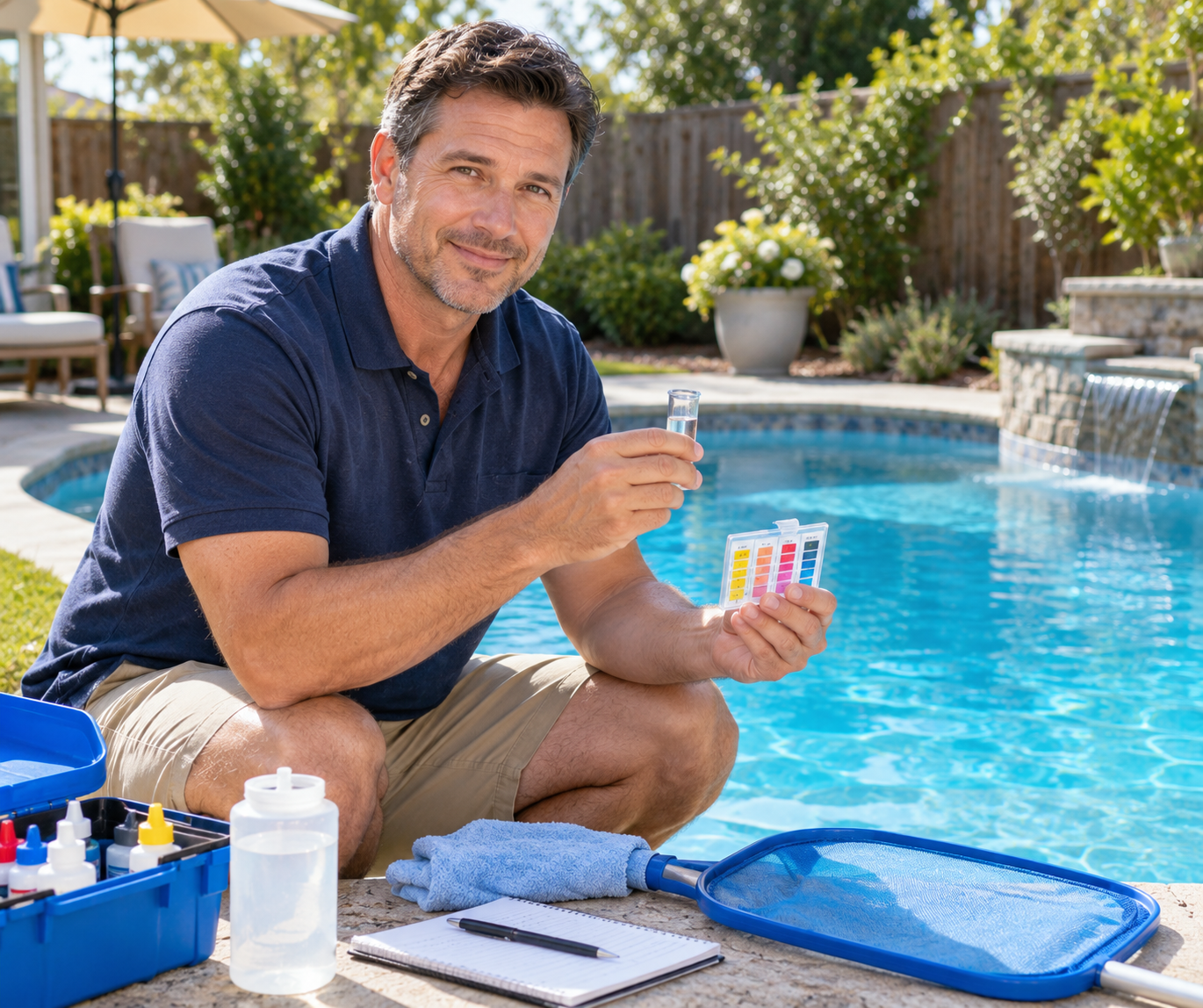

Raking leaves from the surface is only part of pool care. Sand, pollen, and settled debris collect on the floor, while stairs, drain covers, and changing slopes can complicate routine vacuuming. If you’re asking what is the best robotic pool cleaner, the useful answer depends on how your pool is built and which cleaning tasks you want the robot to handle.
The models in this guide range from cordless, battery-powered units to a corded Dolphin option. Their listed features vary: some target flat pool floors, while others are designed to clean walls and the waterline. Pool size ratings, run time, navigation, filtration, and how you’ll retrieve the cleaner all matter. Manufacturer specifications are helpful starting points, but they don’t replace checking the model’s current instructions for your pool and surface.
Robotic cleaners are self-contained compared with suction-side and pressure-side systems, which rely on pool plumbing and may depend on pump flow or a dedicated booster pump. That distinction can simplify setup, but cordless models introduce battery charging and retrieval considerations. The practical question isn’t which feature list looks longest; it’s which cleaner’s stated coverage and operating limits match your pool’s shape, finish, and everyday debris.
Top Products




What Separates a Good Robotic Cleaner from a Suitable One
There isn’t one universally best robotic pool cleaner for every swimming pool. A suitable choice is one whose stated pool type, coverage, and operating limits fit the installation, with filtration that addresses the debris you actually see. A floor-only robot may be a sensible match for a flat-bottom pool, but it won’t take care of wall deposits or a waterline ring. Conversely, wall-climbing capability is less valuable if the pool’s most frequent problem is simply leaves collecting on a broad, flat floor.
The supplied product information covers several cordless robots, two corded Dolphin models, and different pool size and surface claims. Some listings include square-foot coverage or battery run time; the Nautilus AG and Nautilus CC instead describe pool length and a plug-in operating cycle. Those figures describe manufacturer-listed limits, not a guarantee that a cleaner will cover every complicated pool shape equally. Check the exact model listing and manual before purchasing.
Match coverage to pool layout, not just the headline feature
Coverage claims differ meaningfully across these options. The C5 by OUCAXIA is listed for floor cleaning in flat-bottom pools, with a stated surface limit of up to 2,200 square feet. That distinction matters: a large stated floor area does not mean the cleaner is designed to climb walls or scrub the waterline. It may suit an owner who mainly wants routine floor pickup and whose pool profile matches the listed flat-bottom condition.
Other cordless models describe broader coverage. The Lodoba automatic robot lists floor, wall, and full-coverage modes, and a pool area rating up to 2,150 square feet. The WYBOT C1 lists floor, wall, waterline, and step cleaning, with coverage up to 1,618 square feet. The Letexpool C1 describes seven modes and wall and waterline cleaning, while the BRINBO C1 also lists multiple modes for those areas. These are different claims for different products, so don’t treat one model’s modes or area rating as applying to another.
Pool geometry still matters. Built-in steps, narrow corners, raised drains, and abrupt floor transitions can challenge a robot even when its listing includes wall climbing. Product data here doesn’t establish that any model will navigate every obstacle or ledge. If those features occupy a large part of your pool, confirm details with the manufacturer and consider whether the cleaning mode actually includes the surfaces you need covered.
Choose cordless convenience with run time and retrieval in mind
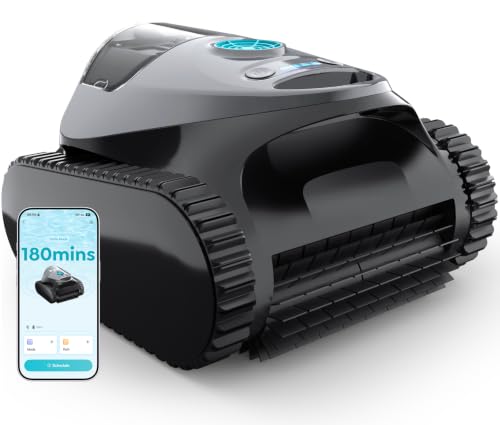
A cordless robot avoids a floating power cable, which removes one source of cable handling and tangles. It does require charging, and the manufacturer’s stated run time is a planning figure rather than a promise for every cleaning condition. Listed examples include up to 190 minutes for the Lodoba model, up to 180 minutes for the Letexpool C1 and BRINBO C1, and up to 160 minutes for the WYBOT C1. The WYBOT B1 is listed for up to 120 minutes and pools up to 1,150 square feet.
Check recharge time as well as runtime if you intend to clean frequently. The supplied listings state a three-hour recharge for the Lodoba, a four-hour charge for the WYBOT C1, and a 2.5-hour full charge for the Letexpool C1. These specifications don’t show how long a cycle will take in every pool, or how battery performance changes with use. Treat them as comparison points, then verify current manufacturer information for the exact model.
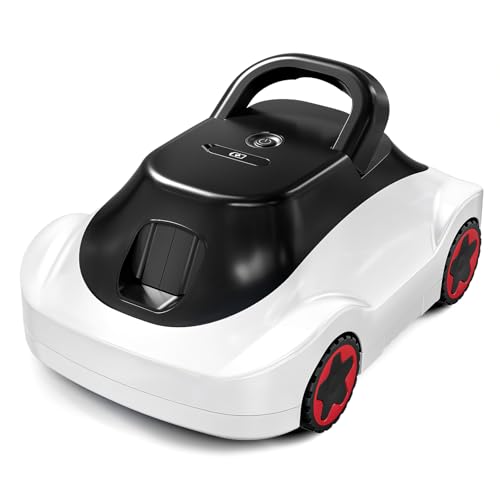
Retrieval deserves attention, especially in a deep pool. The BOTLIFE cordless cleaner is described as self-parking near the edge, with an included hook for retrieval. The OUCAXIA C5 listing also mentions auto-parking near a pool wall and a retrieval hook. Those features may make recovery more convenient, but they do not remove the need to follow the manufacturer’s instructions or use safe lifting technique. Don’t enter deep water or pull a powered cord to retrieve a cleaner.
Weight information is available for the WYBOT B1, listed at 14.3 pounds, but the supplied listings don’t provide comparable weights for every option. A cordless unit can be easier to position without a cable, yet a water-filled cleaner may still take effort to lift. Check whether the selected model provides a retrieval hook or other approved method, and plan where it will drain and dry after use.
Understand what corded operation changes
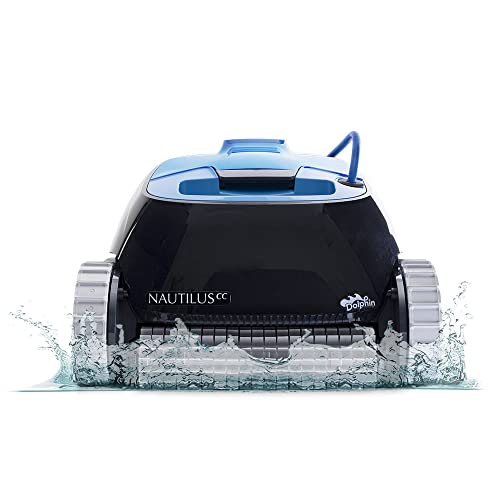
The Dolphin Nautilus AG and Nautilus CC are corded robotic models in the product data. The AG is listed for above-ground pools up to 33 feet long, with a 1.5-hour cycle and top-load filter access; its description specifically says it does not clean walls or the waterline. The Nautilus CC is listed for above-ground and inground pools up to 33 feet long and describes wall climbing, active scrubbing, top-load filter access, and a two-hour cycle. These distinctions make it especially important to read the model name carefully rather than assuming both Nautilus versions clean the same areas.
A corded cleaner doesn’t need a battery recharge between cycles, but the cable needs sensible placement and care. The supplied specifications don’t give cord lengths or describe a swivel mechanism for these models, so don’t assume a particular cable reach or tangle-prevention feature. Confirm that the manufacturer’s specified reach suits your pool, and follow the manual for the power supply, cable routing, and electrical protection. Never modify a cord or operate equipment contrary to its safety instructions.
Plug-and-play setup can be appealing to owners who don’t want to connect a cleaner to suction plumbing or install a booster-pump arrangement. Robotic operation is a different category from suction-side or pressure-side cleaners, though this guide’s product listings don’t provide detailed pool plumbing requirements for robotic models. Review the unit’s instructions for power placement and electrical safety, including the required GFCI protection and any specified distance from pool water.
Debris, Filters, and Pool Surface Compatibility
A robot’s filter determines what debris it can retain, but the product details here don’t provide a consistent micron rating across the listed models. Avoid treating phrases such as “dual filtration” or “fine debris” as proof of a particular particle size. If your recurring problem is fine dust, sand, or dead algae, verify the exact filter type and manufacturer guidance for that debris. If your pool collects larger leaves, consider basket capacity and how often you’re willing to empty it.
The OUCAXIA C5 listing specifies a 2.7-liter top-loading basket and a 180-micron mesh filter. The BOTLIFE listing describes a four-liter basket with 150-micron mesh. Those figures offer concrete points of comparison for debris storage and stated mesh size, but they don’t establish how often a basket will need emptying in your yard. Heavy leaf fall can fill any collection container faster than routine light debris, so plan to inspect and rinse the filter after a cycle as directed.
Top-access baskets can be convenient because the filter is reached from above, as described for the Dolphin Nautilus models and the OUCAXIA C5. Filter care remains part of ownership, regardless of access design. Empty debris where it won’t wash back into the pool, rinse reusable filters according to the manual, and disconnect the cleaner from its power source before servicing it. Don’t use a filter-cleaning method or chemical that the manufacturer hasn’t approved.
Surface compatibility must be confirmed model by model. The OUCAXIA C5 listing names vinyl liner, concrete, fiberglass, and mosaic tile surfaces, while several other supplied descriptions list pool types or navigation features without spelling out an equivalent surface list. Don’t generalize one product’s stated suitability to the rest. For a delicate liner or a slick finish, verify the specific cleaner’s approved surfaces and brush or track guidance before buying.
Wall-climbing claims also need context. The Lodoba description names tile, vinyl, and concrete navigation, while the WYBOT C1 is described as climbing slopes up to 45 degrees. These statements don’t establish performance on every wall finish, waterline, or transition. A robot may also have trouble with narrow steps, shallow shelves, or raised obstacles that aren’t covered in its specifications. Ask the manufacturer about those features if they are central to your pool.
Navigation, Cleaning Modes, and Real-World Tradeoffs
Navigation can shape whether a cleaner revisits the same area or leaves patches untouched. The product listings describe different systems, including sonar navigation for the Lodoba, gyroscope-based path planning for the WYBOT C1 and WYBOT C2, and AI navigation claims for BRINBO. Such descriptions indicate the advertised approach, not independently verified coverage. Pool shape, obstacles, wall transitions, and the selected cleaning mode can all affect the outcome.
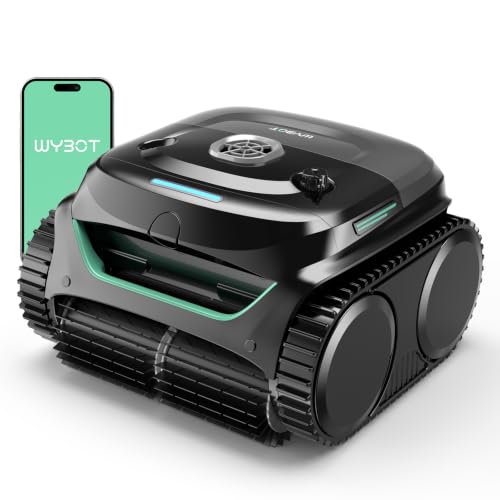
App control is another feature to weigh against simplicity. The Letexpool C1 description lists app control for changing modes and paths, and the WYBOT C1 lists scheduling, mode selection, progress tracking, and over-the-air updates through its app. The BRINBO C1 also lists app settings and timer choices. The Dolphin Nautilus AG, by contrast, emphasizes plug-and-play operation. A phone interface can help with presets, but a simpler start process may be preferable if you don’t need remote settings.
Don’t assume that every advertised mode can be changed while the robot is underwater. The Letexpool and BRINBO descriptions state that settings should be selected before the unit enters the water. Follow the exact model instructions for mode selection and operation rather than trying to interact with a wet cleaner or alter settings in a way the manufacturer doesn’t permit. The feature list should match the way you actually plan to run the robot.
Wall and waterline cleaning can reduce the need for some manual brushing, but a robot shouldn’t be treated as an algae treatment or a substitute for sound water care. The Nautilus AG explicitly excludes walls and waterline cleaning; the Nautilus CC lists wall cleaning but doesn’t claim waterline coverage in the supplied details. Other products describe waterline modes, yet no listing promises removal of every stubborn ring or algae deposit. Persistent buildup may need separate attention consistent with pool-surface and chemical guidance.
Brushes, tracks, and motors differ across the models. The Lodoba listing identifies dual brushless motors and durable tracks, while the Letexpool and BRINBO descriptions refer to triple motors and rolling brushes. Those specifications don’t supply comparative wear rates, repair costs, or evidence that one design lasts longer. Before committing, check the warranty terms, replacement filter availability, and the manufacturer’s service options for the precise model.
How the Listed Models Fit Different Pool Needs
For a flat-bottom pool where floor pickup is the priority, the OUCAXIA C5 stands out in this group for explicitly stating floor-only coverage, a 2,200-square-foot limit, and a sizeable top-loading basket. Its stated 180-minute runtime and auto-parking are useful specifications to compare, but its listing does not make it a wall-cleaning choice. Confirm that your pool’s floor profile fits the manufacturer’s flat-bottom description.
For an above-ground pool, the Dolphin Nautilus AG is explicitly listed for pools up to 33 feet in length and above-ground use. Its limitations are equally clear: the description says it does not clean walls or the waterline. The WYBOT B1 is described for above-ground and small inground pools, with a stated area limit up to 1,150 square feet and up to 120 minutes of runtime. Compare the exact pool type, dimensions, and coverage, rather than relying on the word “robotic.”
For broad coverage modes, options such as the WYBOT C1, Lodoba, Letexpool C1, and BRINBO C1 list wall cleaning, with some also naming waterline coverage. Their stated pool areas and run times differ, and the descriptions don’t establish identical performance. If an inground pool has a large floor area or complex shape, prioritize the specific area rating and mode information for that model, then confirm suitability with the manufacturer.
The WYBOT C2 is listed for inground pools, up to 2,152 square feet per cycle, and up to 180 minutes of runtime. Its description also names dual filtration, including a 10-micron filter and a 180-micron primary filter, plus seven cleaning modes. That filter information is more specific than many other listings, but it still doesn’t guarantee that every kind of fine contaminant will be captured in every condition. Check filter care and replacement availability before purchase.
Value depends on more than the initial purchase. Battery models require charging and may depend on a hook or parking feature for retrieval; corded models require cable management and a correctly positioned power supply. Filters need routine emptying, and replacement parts may affect ownership costs, but the supplied data doesn’t establish future part prices or service life. Compare warranty coverage and replacement-part support directly with the seller or manufacturer rather than treating a feature list as a long-term cost estimate.
Practical Checks Before and After a Cleaning Cycle
Start with the pool’s measured dimensions, bottom profile, and finish. Compare those details with the exact model’s stated pool type and coverage, including whether it is limited to flat floors or intended to climb walls. Then identify your common debris: large leaves call for manageable basket capacity, while fine silt calls for checking what the filter is actually specified to retain. If the listing is vague, ask before purchase rather than inferring a micron rating.
Before operation, inspect the filter basket and accessible brushes or tracks for accumulated debris, following the product manual. Keep cordless models charged as directed and select any required cleaning mode before placing the robot in the water. For a corded unit, use the specified power supply arrangement and GFCI protection, and keep electrical equipment away from water as directed by the manufacturer. Never swim while a powered cleaner is operating unless its instructions specifically permit it.
After a cycle, check whether the cleaner collected debris and whether the expected areas received coverage. An unchanged patch may indicate that the selected mode doesn’t cover that surface, an obstacle interrupts its route, or the pool exceeds the conditions the product is designed for. Clear the filter and inspect the unit as instructed; don’t open sealed motor housings or attempt electrical repairs. If recurring missed areas persist, consult the manufacturer rather than assuming a particular component has failed.
Pool chemistry and storage affect equipment care, but exact limits depend on the manufacturer. Remove the cleaner during shock treatment unless its instructions explicitly allow operation, since concentrated chemicals can be harsh on equipment materials. Rinse, dry, and store the robot as directed, and don’t leave a battery or power supply exposed to conditions the manual prohibits. Avoid inventing a universal water-temperature cutoff; use the specific model’s operating range.
Make the Choice That Fits Your Pool
The right pick follows from a few concrete matches: pool type and area, floor-only versus wall and waterline coverage, debris and filter details, and the practical difference between battery charging and cord handling. For above-ground pools, compare the Dolphin AG and WYBOT B1 only against their stated limits; for flat-floor pickup, examine the C5’s listed conditions; for broader coverage, inspect the exact modes and area rating of each candidate. No single feature settles the decision.
Before ordering, verify current specifications, approved surfaces, warranty, filter replacement options, and retrieval instructions for the exact model. A cleaner that fits the pool’s real shape and your maintenance routine is more useful than one chosen solely for a long feature list. That careful match is the clearest answer to what is the best robotic pool cleaner for your pool.




Write Your Review
No reviews yet. Be the first to share your experience!