


Sudden chemical spikes, burning eyes, and bleached swimwear can catch any spa owner off guard after a routine sanitizing treatment. Managing sanitizer concentration requires understanding water volume, circulation rates, and chemical reactivity. When an accidental chemical overdose occurs or when water smells pungent, knowing how to dilute chlorine in a hot tub protects bathers and prevents long-term damage to spa components. Combining proper water exchange with a durable yard patio hot tub cover ensures that both your water chemistry and physical equipment remain protected against harsh chemical vapor buildup.
Excess sanitizer can corrode delicate acrylic shells, degrade headrests, and deteriorate heater gaskets over time. Fortunately, restoring balanced water does not require complicated equipment or expensive service appointments. Spa owners can bring sanitizer readings back to the safe target of three to five parts per million by following proven physical water exchange techniques and targeted oxidation routines. Taking control of your spa chemistry ensures a comfortable, crystal-clear soak without unnecessary eye irritation or skin dryness.



Pros
- Contains all four foundational water-balancing chemicals plus 50 test strips in one package
- Compatible with acrylic, inflatable, and wooden spas across chlorine, bromine, and salt systems
- Helps prevent cloudy water, foaming, mineral scale, and heater corrosion caused by imbalanced water
- Manufactured in the USA with reliable, fast-dissolving water-care formulas
Cons
- Does not include primary sanitizers such as chlorine or bromine granules, which must be purchased separately
- Source water with extreme hardness or alkalinity may deplete specific individual bottles faster than the rest of the kit
- Requires careful incremental dosing and testing rather than one-size-fits-all application
The Bio Ouster Hot Tub Water Balancing Kit is an all-in-one water adjustment bundle designed for acrylic, inflatable, and wooden hot tubs. Proper water balance is critical for preventing mineral scale, heater corrosion, and bather discomfort, making this starter collection well suited for new spa owners, seasonal refills, and vacation rental hosts who need foundational water-care essentials in a single convenient package.
Maintaining balanced water chemistry requires managing several interconnected parameters, which this kit addresses through dedicated pH Up, pH Down, Alkalinity Increaser, and Calcium Hardness Increaser formulas. By adjusting total alkalinity first to buffer pH fluctuations, and raising calcium levels to protect internal spa plumbing and heating elements, hot tub owners can maintain clear water and protect their equipment investments.
Routine monitoring is supported by the 50 included test strips, which allow quick checks of pH, total alkalinity, and calcium hardness levels before adding any adjustment chemicals. The formulas are designed to work alongside standard sanitizing systems, including chlorine, bromine, ozone, and salt water configurations, without interfering with filtration systems or causing unwanted cloudy precipitation when added properly.
Integrating this kit into a routine hot tub maintenance schedule requires testing freshly filled or top-off water before adding chemicals in gradual increments. Because chemical demand varies depending on municipal tap water characteristics, tub volume, and bather load, spa owners should add adjustments incrementally with the water jets running to ensure thorough circulation and avoid overshooting targets.
A practical limitation to keep in mind is that this bundle is strictly a water-balancing kit and does not contain primary sanitizers such as chlorine or bromine. Additionally, owners with particularly hard or soft source water may find that one specific chemical depletes faster than the others, eventually requiring individual bottle replacements down the road.
Hot tub owners seeking a straightforward, Made-in-USA foundational chemistry package will find practical everyday value in the Bio Ouster water balancing starter kit. Before purchasing, ensure you have your preferred sanitizer on hand and plan to test your tap water before initial dosing to establish an accurate chemical baseline for your spa volume.
Proper water balancing begins with testing total alkalinity, which serves as the chemical buffer that stabilizes pH levels in your spa water. Using the included test strips, hot tub owners should adjust total alkalinity into the recommended range before fine-tuning pH with either pH Up or pH Down to prevent rapid chemical bounce.
Calcium Hardness Increaser is included to ensure water does not become aggressive or corrosive toward spa heating elements, pump seals, and plumbing fixtures. This is particularly relevant for owners in soft-water areas or those filling spas using whole-house water-softener systems where low calcium levels can accelerate metallic component wear.
The formulas are chemically neutral relative to sanitizers, meaning they can be used safely in spas treated with standard chlorine granules, bromine tablets, saltwater chlorination systems, or ozone generators. Always allow chemicals to circulate for at least twenty to thirty minutes before re-testing water or adding secondary treatment products.
Essential Steps to Diluting Chlorine and Balancing Spa Water
Understanding the Two Meanings of Chlorine Dilution
Hot tub owners usually search for chlorine dilution in two distinct situations with completely different goals. The first situation involves reducing an excessive chlorine concentration in the spa after someone accidentally overdosed the water with granules or tablets. The second situation involves the chemical handling technique of pre-dissolving concentrated dry chlorine granules in water before pouring them into the spa vessel. Clarifying your specific goal is critical because handling concentrated sanitizer requires strict safety protocols, whereas lowering high parts per million focuses on hydraulic turnover and water exchange.
A reading above five parts per million of free available chlorine creates an uncomfortable soaking environment and can cause respiratory coughing or itchy skin. High sanitizer levels also produce acidic conditions that degrade equipment seals, acrylic finishes, and rubber jet gaskets. Addressing an over-chlorinated hot tub promptly prevents premature equipment failure and restores safety. Whether you need to lower high chemical readings or prepare dry granules properly, standard chemical principles guide each step of the process.
Physical Water Dilution: The Fastest Fix for Extreme Chlorine Spikes
The most reliable method for bringing down an extreme chlorine spike is physical water dilution through a partial drain and refill. If your test strips or liquid test kit show free chlorine levels exceeding ten parts per million, waiting for the sanitizer to break down naturally can take several days. Draining approximately one-third to one-half of the spa water immediately drops the chemical concentration by a proportional amount. Adding fresh tap water back into the spa vessel instantly cuts the chemical concentration in half without introducing counteracting chemical neutralizers.
Always turn off power to the hot tub at the dedicated breaker panel before draining water below the skimmer line. Running a circulation pump dry can cause pump cavitation, air locks, or severe damage to the mechanical shaft seal. Use a submersible utility pump or open the lower gravity drain valve to evacuate the calculated water volume. Once refilled from a clean garden hose, turn the equipment back on and let the water circulate for at least thirty minutes before testing the new baseline.
Testing your source water prior to the refill helps you anticipate secondary chemistry adjustments. Municipal tap water often contains trace minerals, chloramines, or variable alkalinity levels that alter water balance. Knowing these initial parameters allows you to adjust total alkalinity and pH smoothly once the fresh water blends with the remaining spa volume. This controlled dilution method guarantees an immediate drop in sanitizer without creating unpredictable chemical rebounds.
Passive Dissipation: Using Aeration, Heat, and Cover Removal
If your test results indicate only a mild elevation between six and eight parts per million, physical water replacement may not be necessary. Chlorine naturally breaks down when exposed to ultraviolet light, high temperatures, and vigorous aeration. Removing your thermal spa cover completely is the critical first step because trapped chloramine gas cannot escape through closed vinyl. Using a protective hot tub cover with warranty protects your equipment when the tub is idle, but keeping it folded back during chemical venting prevents vapor damage to the underside lining.
Engage the high-speed jet pumps and open all independent air control valves to maximize surface agitation. Introducing air bubbles into the water speeds up the off-gassing process by expanding the surface area where chemical vapors escape into the atmosphere. The heat of the spa water further accelerates the metabolic decomposition of active hypochlorous acid molecules. Running two consecutive twenty-minute jet cycles with the cover open frequently lowers mild chlorine spikes by one to two parts per million.
Direct sunlight provides an additional natural boost for decomposing unneeded free sanitizer. Ultraviolet rays rapidly break the chemical bonds of unstabilized chlorine, converting active ions into inert chloride salts. Just two hours of direct afternoon sun exposure with the cover off can eliminate significant amounts of excess sanitizer. Once the reading drops into the target range of three to five parts per million, replace the cover to conserve heat and prevent airborne debris from settling in the water.
Chemical Neutralizers Versus Fresh Water Dilution
Commercial chlorine neutralizers, such as sodium thiosulfate, offer a rapid chemical path to lowering high sanitizer levels. These products react almost instantly with free chlorine molecules, neutralizing them into harmless salts and sulfates. While convenient, applying chemical neutralizers requires extraordinary precision because overdosing the neutralizer creates a persistent chlorine demand. If you add even a fraction too much sodium thiosulfate, subsequent chlorine additions will be instantly consumed, leaving the spa vulnerable to bacteria.
Because of this rebound hazard, physical water dilution remains the preferred solution for most backyard hot tub owners. Diluting with fresh water carries zero risk of creating an artificial chemical block that prevents future sanitization. If you choose to use a chemical neutralizer, measure tiny doses, circulate the water for twenty minutes, and test repeatedly before adding more. Never attempt to neutralize chlorine down to zero, but aim instead for four parts per million to maintain continuous biocide protection.
Safe Procedures for Pre-Dissolving and Broadcasting Chlorine Granules
The second meaning of chlorine dilution relates to preparing granular chemicals before introducing them into the hot tub. Standard hot tub chlorine consists of sodium dichlor granules, which dissolve relatively quickly compared to pool-grade trichlor pucks. Many product manufacturers advise broadcasting granules directly across the water surface while the jets run on low speed. This direct application prevents granules from settling onto the acrylic floor where concentrated chemical spots could bleach the shell finish.
If you prefer to pre-dissolve dry sanitizing granules to ensure total solution blending, you must follow strict chemical handling rules. Always fill a clean plastic five-gallon bucket with warm spa water first, and then slowly sprinkle the measured granules into the water. Never add water to dry chemical granules, as doing so can trigger an intense exothermic heat reaction or release concentrated toxic chlorine gas. Stir the mixture gently with a dedicated plastic paddle until the granules disappear completely, and then pour the solution evenly around the perimeter.
Keep your head turned away from the bucket during mixing to avoid inhaling concentrated chemical vapor. Wear protective rubber gloves and eye protection whenever handling undiluted oxidizers or dry sanitizing powders. Once the solution is poured into the spa, leave the cover completely open for at least twenty minutes. Allowing fresh air to circulate across the churning water surface prevents corrosive gases from attacking the underside of your foldable hot tub cover and degrading its insulating vapor barrier.
Balancing Total Alkalinity and pH to Optimize Sanitizer Efficacy
Sanitizer concentration does not function in isolation from your underlying water chemistry parameters. The effectiveness of free chlorine depends heavily on maintaining a balanced pH level between 7.2 and 7.8. When water pH climbs above 7.8, the percentage of active hypochlorous acid drops dramatically, rendering the sanitizer sluggish and ineffective. Conversely, a pH reading below 7.2 makes the water overly acidic, accelerating equipment corrosion and causing chlorine to gas off too quickly.
Total alkalinity acts as a vital buffering shield that prevents rapid, erratic swings in your water pH. The ideal range for total alkalinity in a standard portable hot tub sits between 80 and 120 parts per million. If your alkalinity is too low, any small chemical addition causes wild pH fluctuations that destabilize your sanitizing routine. Always test and adjust total alkalinity using sodium bicarbonate before making micro-adjustments to pH or introducing maintenance shock treatments.
Comprehensive testing supplies, such as those found in the Bio Ouster Hot Tub Water Balancing Kit or the Hot Tub Things Chlorine Starter Kit for Hot Tub, provide the exact test strips and balancing agents necessary for total control. These kits contain pH increaser, pH decreaser, and alkalinity buffers that stabilize your water matrix. Establishing a solid alkaline foundation ensures that every grain of chlorine dissolves evenly and sanitizes effectively without requiring frequent corrective chemical overdoses.
Using Non-Chlorine Shock to Prevent Chronic Over-Sanitization
Many hot tub owners accidentally spike their chlorine levels because they mistake combined chloramines for a lack of active sanitizer. When bathers use a spa, body oils, sweat, cosmetics, and lotions react with free chlorine to form combined chlorine, known as chloramines. Chloramines produce that classic harsh chemical odor and irritate bathers’ eyes while offering virtually zero sanitizing power. Inexperienced owners frequently smell this odor, assume the tub needs more sanitizer, and dump excessive dichlor granules into the water.
Instead of adding more chlorine, the proper solution is applying an oxygen-based non-chlorine shock oxidizer. Products such as the AquaDoc Non Chlorine Hot Tub Shock and the 2LB Chlorine-Free Hot Tub Shock Oxidizer from Kriooxluue use potassium monopersulfate to burn off organic waste. These oxidizing treatments break down bather residues and destroy chloramines without adding any additional chlorine to the water. Incorporating an oxygen shock into your weekly care routine keeps the water sparkling clear while preventing unnecessary sanitizer accumulation.
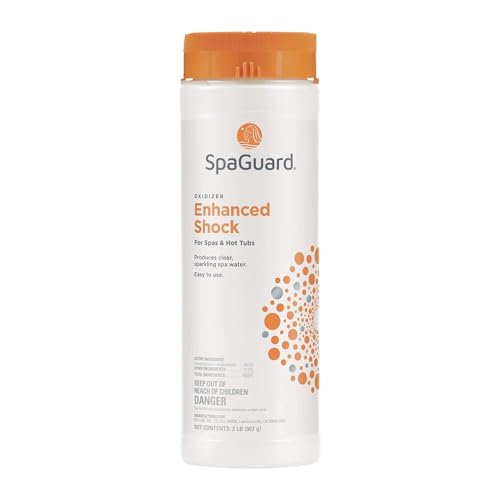
Similarly, multi-purpose formulas like the SpaGuard Enhanced Shock, 2 lb, Single Pack combine oxidizers, clarifiers, and buffers to renew water clarity in one step. Because these shock treatments work alongside existing sanitizing systems, they restore active free chlorine efficiency without forcing you to dilute the water later. Circulate the water with the jets running for fifteen to twenty minutes after adding non-chlorine shock. This routine allows oxidizers to work through the plumbing and filter cartridge, refreshing the water without driving sanitizer levels out of balance.
Managing Cyanuric Acid Buildup and Chlorine Lock
Granular chlorine formulated for spas consists of sodium dichlor, which contains approximately fifty percent cyanuric acid by weight. Cyanuric acid serves as a stabilizer that protects chlorine molecules from degradation by sunlight. In an outdoor swimming pool, stabilizer is essential, but in a covered hot tub, cyanuric acid accumulates rapidly with every single chemical addition. Because cyanuric acid does not evaporate or decompose, its concentration climbs steadily over weeks of regular maintenance.
Once cyanuric acid levels climb past fifty to eighty parts per million, a condition known as chlorine lock begins to occur. The stabilizer binds tightly to the free chlorine molecules, preventing them from releasing active hypochlorous acid to sanitize the water. When this happens, test strips may indicate plenty of total chlorine, yet the water turns cloudy and bacterial biofilms begin forming. Frustrated owners often add even more chlorine in response, worsening the lock and compounding the chemical imbalance.
There is no chemical additive capable of neutralizing or reducing cyanuric acid in a residential hot tub. The only genuine remedy for cyanuric acid accumulation is physical water dilution or a complete drain and refill. Replacing your spa water every three to four months resets cyanuric acid to zero, restoring total sanitizer efficacy. Monitoring stabilizer buildup ensures that your dilution efforts address the true underlying root cause rather than treating superficial symptoms.
Best Practices for Regular Testing and Chemical Maintenance Schedules
Establishing a disciplined weekly testing schedule eliminates the guesswork that leads to chemical overdoses and emergency dilution. Test your hot tub water at least twice a week using high-quality test strips or a reliable liquid reagent kit. Check free available chlorine, total chlorine, pH, total alkalinity, and calcium hardness before adding any treatments. Recording your readings in a notebook helps you identify chemical drift patterns and adjust dosage amounts based on actual bather usage.
Always calculate chemical additions according to the exact gallon capacity of your specific hot tub model. An average four-person spa holds roughly three hundred to four hundred gallons of water, requiring surprisingly small chemical measurements. Adding a single tablespoon of granular dichlor to three hundred gallons of water can raise sanitizer levels by three to five parts per million. Measuring with dedicated chemical scoops prevents accidental spikes and saves you the frustration of having to drain water later.
Rinse your pleated filter cartridges every week with clean tap water and soak them monthly in a specialized degreasing solution. A clogged, oily filter cartridge restricts water flow, reduces circulation efficiency, and traps organic contaminants that consume sanitizer prematurely. Clean filters allow sanitizing chemicals and non-chlorine shock oxidizers to circulate evenly throughout the entire plumbing manifold. Maintaining proper filtration reduces overall chemical demand and keeps your water crystal clear with minimal intervention.
Final Verification and Long-Term Water Care Strategies
Before allowing anyone back into the spa after a dilution procedure, perform a final comprehensive water test. Verify that free chlorine falls securely within the safe target zone of three to five parts per million. Confirm that your pH sits comfortably between 7.2 and 7.6, and that total alkalinity remains stable near one hundred parts per million. Once all chemical parameters align, the water will feel soft, smell neutral, and provide a soothing soaking experience for every bather.
Encouraging bathers to take a quick rinse before entering the tub dramatically reduces the introduction of lotions, perfumes, and perspiration. Minimizing organic contaminants preserves active chlorine, keeps chloramines at bay, and eliminates the urge to over-treat the water. Pairing smart bather habits with balanced starter kits and non-chlorine oxidizers creates a resilient, low-maintenance hot tub environment. With these safe dilution techniques and balancing strategies in hand, you can maintain pristine, healthy spa water all season long.


Write Your Review
No reviews yet. Be the first to share your experience!