
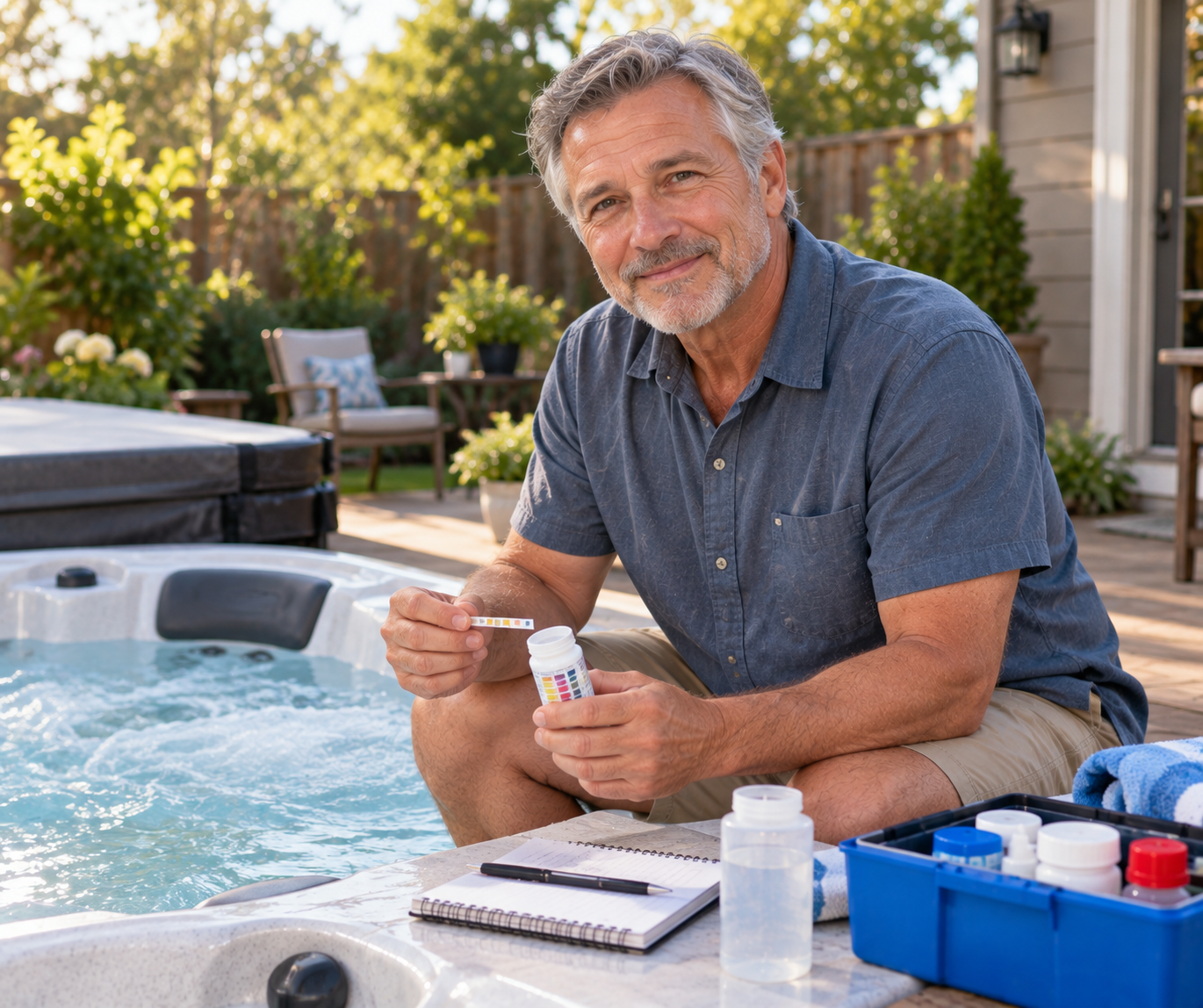

Stepping out to the patio for an evening soak only to discover murky, dull water is an immediate frustration for any spa owner. Understanding how to clear cloudy hot tub water fast requires identifying the root cause, whether it stems from suspended organic debris, low sanitizer residuals, or unmanaged bather waste. Maintaining balanced water chemistry, checking filtration performance, and selecting the right clarifying agents can restore your spa water back to pristine condition without unnecessary downtime.
High bather loads, body oils, cosmetic residues, and fluctuating total alkalinity frequently destabilize water clarity in portable spas. Utilizing an effective yard patio hot tub cover helps keep environmental contaminants such as pollen and foliage out of your water, but fast chemical intervention is still needed when cloudiness appears. The products highlighted below are formulated to bind tiny suspended particles so your cartridge filter can trap them efficiently. Restoring crystal clarity allows you to protect your spa components while enjoying a clean, inviting soak.

Pros
- Compatible with all major spa sanitizers including chlorine, bromine, and biguanide
- Improves filter media efficiency by binding fine particles that normal cartridges miss
- Concentrated formula requires relatively small doses per treatment
- Compact bottle footprint fits easily into standard outdoor storage cabinets
Cons
- Requires clean filter cartridges to capture coagulated debris without restricting water flow
- Does not resolve cloudiness caused by severely unbalanced pH, total alkalinity, or zero sanitizer
- Liquid format requires careful measuring to prevent accidental over-treatment
HTH Spa 86121 Clarifier is a concentrated liquid water-care treatment designed to clear dull, hazy water in portable and built-in hot tubs. This maintenance product serves first-time hot tub owners, busy families, and vacation rental managers who need a dependable way to restore water clarity after heavy bather loads without having to perform an immediate, water-wasting drain and refill.
Microscopic particles such as dead algae, lotions, cosmetic residues, and fine environmental dust often bypass standard hot tub cartridge filters due to their tiny particle size. HTH Spa Clarifier acts as a coagulant, combining those microscopic floaters into larger masses that your filtration system can easily snare during standard circulation cycles. This action directly supports filter efficiency and helps keep water looking transparent and inviting.
Chemical compatibility is a critical consideration for any spa additive, and this formula is designed to work across diverse sanitation programs. HTH lists compatibility with chlorine, bromine, and biguanide sanitizers, making it versatile for virtually any residential spa setup. The 16-ounce bottle weighs approximately one pound and measures 2.46 by 2.46 by 7.85 inches, allowing it to fit neatly inside outdoor storage bins, hot tub steps with storage compartments, or utility shelves.
Application fits easily into standard spa care routines. Adding the recommended dose while the circulation pump or low-speed jets are active distributes the liquid evenly across the spa volume. After the clarifier binds suspended debris and directs it toward the filter, owners should plan to rinse or chemically wash their filter cartridges within a day or two to remove the collected solids and maintain optimal circulation pressure.
While clarifiers are effective at targeting physical haze, they cannot substitute for fundamental water balancing. If cloudy water is driven by incorrect total alkalinity, skewed pH levels, or an absence of active sanitizer, those underlying chemistry issues must be corrected first. Furthermore, overdosing clarifier can occasionally cause foaming or reverse cloudiness, meaning precise measurement remains necessary during application.
For owners seeking a low-cost, straightforward tool to maintain polished, sparkling water between scheduled drain intervals, HTH Spa Clarifier is a practical addition to the maintenance cabinet. Verifying that your spa filter is clean and that water balance parameters are within normal ranges before pouring will deliver the clearest results.
HTH Spa Clarifier is formulated for broad chemical compatibility, allowing safe use alongside chlorine, bromine, and biguanide sanitizing programs. This flexibility prevents chemical conflict and makes it suitable for both standard residential tubs and rental property installations utilizing different sanitation preferences.
For optimal results, ensure the hot tub water has balanced pH and active sanitizer levels before adding the clarifier. Activating low-speed filtration jets while dosing ensures the liquid disperses thoroughly across the water column to bind tiny particles uniformly.
Because this clarifier gathers microscopic contaminants so that the spa filter can catch them, regular filter maintenance is essential after treatment. Thoroughly rinsing your cartridge pleats with clean water after running the cycle prevents coagulated debris from causing filter restriction.
Store the 16-ounce bottle in a cool, dry, and well-ventilated area away from direct sunlight. Ensuring the cap is tightly secured after each use preserves chemical potency and prevents accidental leakage inside your spa storage box or cabinet.

Pros
- Coagulates micro-particles so standard spa cartridge filters can trap fine debris
- Designed to clarify cloudy water without altering overall pH balance
- Simple application procedure using active spa jets for rapid circulation
- Compact 1-pint bottle is easy to store alongside routine hot tub chemicals
Cons
- Requires a clean, functioning filter cartridge to physically remove the clumped debris
- Over-dosing can lead to temporary haziness, requiring careful measurement based on spa gallon capacity
- Does not replace primary sanitizers or shock treatments for bacteria and heavy organic buildup
AquaDoc Hot Tub Clarifier is a concentrated liquid treatment designed to clear cloudy water and support routine cartridge filtration. It best suits hot tub owners, vacation rental hosts, and busy homeowners who experience dull or hazy water resulting from bather load, body lotions, or fine airborne debris. Instead of waiting for microscopic suspended solids to slowly cycle out through standard circulation, this formula acts as a coagulant to bundle tiny particles together so spa filters can trap them efficiently.
Microscopic dirt particles are frequently smaller than the micron rating of standard hot tub cartridge filters, allowing them to bypass filter pleats and keep the water looking hazy. AquaDoc works by attracting these micro-particles like a magnet, creating larger agglomerations that the filter media can physically catch. Running spa jets and blowers during application accelerates circulation, allowing the treatment to disperse evenly throughout the tub and push debris toward the skimmer intake.
Maintaining water balance is a central part of spa ownership, and chemical additions that swing pH can trigger scale or skin irritation. This clarifier is formulated to clear water without upsetting established pH levels, which helps avoid cascading chemical adjustments. By pulling floating debris out of suspension, it helps cartridge filters capture dirt effectively, though regular filter rinsing remains essential to flush away the collected material.
Applying the clarifier fits easily into weekly spa care routines without complicated steps. The manufacturer directions suggest adding 2 ounces for every 800 gallons of water while the jets or blowers are active, continuing filtration until the water turns clear. For standard residential tubs, which often hold between 300 and 450 gallons, measuring out roughly 1 ounce twice a week provides consistent water maintenance without over-treating.
While clarifiers improve mechanical filtration, they are not a substitute for proper sanitizer levels, oxidizers, or routine filter cleaning. If a hot tub filter cartridge is already loaded with oils or scale, adding a clarifier will yield limited results until the filter is thoroughly rinsed or degreased. Additionally, overdosing clarifier can have an inverted effect, where excess polymers temporarily cloud the water, making accurate measurement essential.
AquaDoc Hot Tub Clarifier is a reliable, practical addition to any spa chemical cabinet for clearing minor haziness and supporting regular filtration. Before adding it to your spa, verify your water sanitizer levels, test baseline pH, and inspect your cartridge filter to ensure it is clean and ready to trap the gathered particles. Hot tub owners looking for a low-fuss way to preserve water clarity between water changes will find good everyday value here.
Using AquaDoc Hot Tub Clarifier effectively requires basic attention to spa capacity and filtration cycles. The listed dosage is 2 ounces for every 800 gallons of water, meaning most typical residential hot tubs holding 350 to 400 gallons require approximately 1 ounce per application. Adding the measured dose twice weekly with the circulation jets running ensures thorough dispersion across the entire spa shell.
Because the clarifier works by grouping tiny particles into larger debris, your spa filter cartridge does the physical work of removing the cloudiness from the water. Running the filtration cycle until the water clears is essential, followed by a quick garden-hose rinse of the filter pleats to prevent the trapped coagulants from restricting water flow.
A Practical Action Plan for Clearing Cloudy Spa Water Fast
When spa water turns milky or hazy, bathing comfort drops immediately and sanitation safety becomes uncertain. Restoring clarity quickly requires a methodical approach that targets the underlying biological and chemical culprits rather than guessing with random treatments. Evaluating sanitizer residuals, correcting water balance, boosting filtration efficiency with targeted clarifiers, and running proper circulation cycles will return murky water to a sparkling state in minimal time.
Immediate Diagnostic Checks: Identifying Why Spa Water Turns Cloudy
Cloudiness in a hot tub is almost always a visible symptom of microscopic suspended particles reflecting light. These particles can include dead organic matter, living bacteria, dissolved minerals falling out of solution, or bather waste such as body oils, cosmetics, and perspiration. When bather load spikes unexpectedly during a social gathering, the existing sanitizer residual often gets depleted faster than it can replenish. Once free chlorine or bromine drops below recommended thresholds, microorganisms multiply and suspended contaminants turn the water dull or turbid.
Mechanical filtration problems represent another frequent trigger for cloudy spa water. Hot tub cartridge filters rely on pleated polyester fabric designed to trap particles down to approximately twenty or thirty microns. If the filter media becomes saturated with body oils or calcium scale, water bypasses the filtration process or flow rates diminish significantly. Without sufficient circulation and mechanical trapping, fine particulate matter remains suspended indefinitely regardless of how many chemicals you add.
Environmental debris and chemical precipitation also contribute to sudden turbidity. Airborne pollen, tree sap, dust, and rainwater easily contaminate outdoor spas if the thermal cover remains off or fits loosely. Adding high doses of adjusting chemicals without adequate spacing can trigger mineral precipitation, creating a temporary milky cloud of calcium carbonate. Identifying which of these factors triggered your water issue ensures you apply the correct remedy immediately.
Correcting Water Chemistry Balance as the First Mandatory Step
Attempting to clear water without first testing and balancing base chemical parameters is one of the most common mistakes spa owners make. Sanitizers like chlorine and bromine lose significant efficacy when the pH drifts outside the ideal range of 7.2 to 7.8. When pH climbs above 7.8, chlorine becomes largely inactive and dissolved calcium can fall out of solution to create persistent haze. Low pH creates corrosive water that irritates skin, damages metal heater elements, and accelerates equipment wear.
Total alkalinity acts as the vital chemical buffer that prevents erratic pH swings, and it should always be adjusted before attempting to balance pH. The recommended range for total alkalinity is 80 to 120 parts per million in most portable spas. If alkalinity is low, pH will fluctuate unpredictably with every soak or chemical addition, complicating any water clearing efforts. Using a dependable test strip kit or liquid reagent testing set allows you to verify that alkalinity sits squarely within this target range.
Calcium hardness must also be evaluated to ensure it remains between 150 and 250 parts per million. Water with excessively high calcium levels frequently clouds up when heated, as heat reduces calcium solubility and encourages scale formation on acrylic surfaces and inside plumbing. If calcium hardness is high due to local hard tap water, adding a stain and scale control agent can sequester excess minerals. Once total alkalinity, pH, and calcium hardness are aligned, your sanitizers and clarifiers can perform at peak efficiency.
Deploying Shock Oxidation to Destroy Organic Contaminants and Chloramines
Once base water balance is established, shocking the spa is essential for destroying the organic waste responsible for cloudiness. Standard daily sanitizer levels are often insufficient to break down accumulated bather oils, skin cells, and combined chlorine compounds known as chloramines. Chloramines form when free chlorine binds with nitrogen from sweat and cosmetic products, producing that unpleasant chemical odor while leaving water murky and dull. A heavy shock treatment oxidizes these complex compounds and burns away organic micro-debris.
Spa owners generally choose between non-chlorine oxidizers and chlorine shock treatments depending on current sanitization levels. Non-chlorine shock, formulated from potassium peroxymonosulfate, is an excellent choice when you need to oxidize organic material rapidly without raising free chlorine levels too high. Non-chlorine shock allows bathers to re-enter the water much faster because it does not introduce harsh halogen residuals. It works efficiently to free up combined chlorine so your residual sanitizer can resume active pathogen control.
When water cloudiness is severe or accompanied by visible algae or slippery biofilm on the shell, a concentrated dose of chlorine shock such as sodium dichlor is required. Chlorine shock elevates free sanitizer levels high enough to eliminate bacterial blooms and sanitize every corner of the plumbing system. Always run the jet pumps on high speed with the air controls turned off and the cover removed for at least twenty minutes after adding shock. Leaving the cover off allows oxidizing chemical off-gases to escape freely rather than deteriorating your cover underside.
Utilizing Dedicated Spa Clarifiers for Fast Coagulation
Sanitizers kill bacteria and shock oxidizes organic waste, but microscopic debris can remain suspended because it is too tiny for pleated cartridge filters to capture. Dedicated spa clarifiers provide an indispensable shortcut to crystal-clear water by targeting these ultra-fine particles. Products like HTH Spa 86121, Clarifier, 16 oz feature a concentrated formula engineered to increase overall filter efficiency across all standard sanitization systems, including chlorine, bromine, and biguanide setups. Clarifiers work through a chemical process called coagulation, which neutralizes the electrical charges on tiny suspended particles.
As these micro-particles lose their repelling charges, they attract one another like microscopic magnets and form larger clusters. The AquaDoc Hot Tub Clarifier operates on this exact magnetic principle, clumping together fine dirt and foam-causing residues so cartridge filters can physically trap them. Manufacturer instructions for AquaDoc specify adding two ounces of clarifier for every 800 gallons of water while running the jet pump or blower. Using a concentrated clarifier dramatically accelerates the clearing process compared to relying on filtration alone.
Proper dosing is critical when applying water clarifiers because more is not better with polymer-based chemicals. Overdosing a clarifier can reverse the coagulation effect, causing particles to repel each other again and making the water cloudier than before. Always measure the dosage carefully based on the precise water capacity of your specific spa model. Once added, the clarifier should circulate continuously through the system to maximize contact with suspended debris.
Step-by-Step Rapid Clearing Protocol for Murky Spa Water
Clearing cloudy spa water fast requires performing chemical additions and mechanical tasks in a strict chronological order. Begin by removing the hot tub cover entirely and testing the water with a reliable test strip or drop test kit. Check total alkalinity first and adjust it into the 80 to 120 parts per million range using an alkalinity increaser or decreaser. Next, verify that the pH settles between 7.2 and 7.8, adjusting as necessary with sodium bisulfate to lower or sodium carbonate to raise pH.
After the water balance stabilizes, dose the spa with your chosen shock oxidizer to eliminate bather waste and break apart chloramines. Turn on the primary hydrotherapy jet pumps to high speed to ensure thorough circulation throughout the entire water volume. Keep the hot tub cover open for twenty to thirty minutes so that volatile chemical fumes can dissipate harmlessly into the open air. This intense oxidation stage creates the sanitary foundation necessary for clarifying agents to work effectively.
While the shock circulates, remove the cartridge filter and spray it down thoroughly to eliminate surface debris that could impede flow. Reinstall the clean filter cartridge and measure the appropriate dose of concentrated clarifier, such as HTH Spa 86121 or AquaDoc Hot Tub Clarifier. Pour the clarifier directly into the main body of water with the circulation pump running. Set your spa control pack to run continuous filtration for twelve to twenty-four hours to pull the coagulated particle clusters directly into the filter pleats.
Maximizing Cartridge Filter Performance During the Clearing Cycle
The finest chemical clarifiers cannot restore water clarity if the mechanical filtration system is compromised. During an aggressive water clearing cycle, the cartridge filter will collect a massive volume of clumped particles in a short period. As debris accumulates within the polyester pleats, head pressure inside the filter housing rises while water flow rates decline. You should plan to pull the filter cartridge out and rinse it with a pressurized garden hose nozzle after twelve hours of continuous clearing.
Routine water rinsing removes surface particles, but it cannot dissolve oily bather residues or hardened mineral scale trapped deep inside the fabric fibers. Using a specialized filter cartridge degreasing solution every few weeks dissolves body oils, lotions, and soap film that plain water cannot dislodge. Soaking the cartridge overnight in a dedicated cleaner restores the original pore size and flow rate of the pleated media. Keeping a spare filter cartridge on hand allows you to swap filters instantly, ensuring the tub never circulates without active filtration.
Shielding your spa from external airborne contamination also preserves filter longevity and prevents sudden clarity crashes. Utilizing a durable spa cover with warranty protection prevents leaves, pollen, dust, and rainwater from entering the tub when it sits idle. Uncovered spas or spas with cracked, deteriorating covers experience much higher contamination rates that overwhelm filtration systems. A snug-fitting, well-sealed cover acts as your first physical barrier against the outdoor elements.
Total Dissolved Solids and Recognizing When to Drain the Tub
Sometimes a hot tub resists all chemical balancing, shocking, and clarifying efforts despite diligent maintenance. When water reaches this stubborn state, the root problem is usually an excessive concentration of Total Dissolved Solids, commonly abbreviated as TDS. Every chemical tablet, granular shock, pH adjuster, and bather contaminant leaves behind residual dissolved minerals and salts. Over several months of consistent soaking, these dissolved solids saturate the water volume completely.
Once TDS levels exceed 1,500 parts per million over the baseline TDS of your fresh fill water, the water reaches a chemical saturation ceiling. At this saturation point, chemicals cannot dissolve properly, sanitizers lose efficiency, and the water stays perpetually hazy or foamy. Cyanuric acid buildup from routine dichlor usage also causes sanitizer lock when levels exceed 100 parts per million. When TDS or stabilizer concentrations climb too high, no quantity of clarifier or shock will produce lasting clarity.
Draining and refilling the hot tub is the only practical solution when high TDS or chemical saturation causes persistent cloudiness. Portable spas typically require a complete drain and refill every three to four months under normal domestic usage patterns. Before draining, running an enzymatic plumbing flush through the lines strips away hidden biofilm inside internal manifolds. Refilling with clean water through the filter well prevents air locks in the pump wet end and provides a pristine baseline for fresh chemical balancing.
Proactive Maintenance Strategies to Keep Spa Water Sparkling Clean
Preventing cloudiness from developing in the first place saves significant time, chemical expense, and maintenance effort. One of the most effective habits is encouraging all bathers to rinse off quickly in the shower before entering the spa. Eliminating residual deodorants, body lotions, tanning oils, and laundry detergent residues from swimsuits dramatically reduces the initial organic load on the water. Less organic contamination means your sanitizer can focus on neutralizing ambient bacteria rather than battling heavy cosmetic waste.
Establishing a consistent weekly chemical regimen keeps water parameters stable and avoids the dramatic crashes that lead to severe cloudiness. Test sanitizer residuals, pH, and total alkalinity two to three times each week, making minor incremental adjustments before numbers drift out of range. Incorporating a light dose of non-chlorine shock after heavy soaking sessions rapidly oxidizes bather waste before chloramines can form. Routine preventative dosing of water clarifiers, such as using AquaDoc Hot Tub Clarifier twice weekly, keeps micro-debris continually coagulated and captured.
Programming your spa topside control pack to run adequate daily filtration cycles based on your bather load and tub capacity maintains continuous clarity. Most modern portable hot tubs should run filtration for at least four to six hours each day to turn over the full water volume multiple times. Inadequate filtration cycles leave water stagnant, allowing fine particulates to settle and turn the tub murky. Combining regular filtration cycles with clean filters, balanced chemistry, and timely clarifier treatments guarantees that your hot tub remains clean, inviting, and ready for relaxing soaks.



Write Your Review
No reviews yet. Be the first to share your experience!