


Opening a backyard spa to discover cloudy water, persistent foaming, or an aggressive chemical smell often indicates that the sanitizer and mineral balance has drifted out of spec. Maintaining clear, soothing water requires routine monitoring rather than guesswork, protecting bathers from skin irritation and safeguarding internal heater elements from corrosive damage. Learning how to check hot tub chemicals allows owners to detect minor shifts in water balance before chloramines cause harsh odors or calcium scaling coats the acrylic shell. Securing a tight fit with a quality patio hot tub cover prevents debris from loading the filtration system, making weekly testing far more consistent.
Routine chemical evaluation does not require an advanced laboratory setup, but it does demand proper technique and the right diagnostic tools. Using multi-parameter test strips or dedicated drop test kits enables you to measure total alkalinity, pH, and free chlorine in less than a minute. When you master standard sampling practices, you can make quick corrections with balancing products, keeping your hydrotherapy jets running smoothly and extending the lifespan of your spa equipment.


Pros
- Contains all four foundational water-balancing chemicals plus 50 test strips in one package
- Compatible with acrylic, inflatable, and wooden spas across chlorine, bromine, and salt systems
- Helps prevent cloudy water, foaming, mineral scale, and heater corrosion caused by imbalanced water
- Manufactured in the USA with reliable, fast-dissolving water-care formulas
Cons
- Does not include primary sanitizers such as chlorine or bromine granules, which must be purchased separately
- Source water with extreme hardness or alkalinity may deplete specific individual bottles faster than the rest of the kit
- Requires careful incremental dosing and testing rather than one-size-fits-all application
The Bio Ouster Hot Tub Water Balancing Kit is an all-in-one water adjustment bundle designed for acrylic, inflatable, and wooden hot tubs. Proper water balance is critical for preventing mineral scale, heater corrosion, and bather discomfort, making this starter collection well suited for new spa owners, seasonal refills, and vacation rental hosts who need foundational water-care essentials in a single convenient package.
Maintaining balanced water chemistry requires managing several interconnected parameters, which this kit addresses through dedicated pH Up, pH Down, Alkalinity Increaser, and Calcium Hardness Increaser formulas. By adjusting total alkalinity first to buffer pH fluctuations, and raising calcium levels to protect internal spa plumbing and heating elements, hot tub owners can maintain clear water and protect their equipment investments.
Routine monitoring is supported by the 50 included test strips, which allow quick checks of pH, total alkalinity, and calcium hardness levels before adding any adjustment chemicals. The formulas are designed to work alongside standard sanitizing systems, including chlorine, bromine, ozone, and salt water configurations, without interfering with filtration systems or causing unwanted cloudy precipitation when added properly.
Integrating this kit into a routine hot tub maintenance schedule requires testing freshly filled or top-off water before adding chemicals in gradual increments. Because chemical demand varies depending on municipal tap water characteristics, tub volume, and bather load, spa owners should add adjustments incrementally with the water jets running to ensure thorough circulation and avoid overshooting targets.
A practical limitation to keep in mind is that this bundle is strictly a water-balancing kit and does not contain primary sanitizers such as chlorine or bromine. Additionally, owners with particularly hard or soft source water may find that one specific chemical depletes faster than the others, eventually requiring individual bottle replacements down the road.
Hot tub owners seeking a straightforward, Made-in-USA foundational chemistry package will find practical everyday value in the Bio Ouster water balancing starter kit. Before purchasing, ensure you have your preferred sanitizer on hand and plan to test your tap water before initial dosing to establish an accurate chemical baseline for your spa volume.
Proper water balancing begins with testing total alkalinity, which serves as the chemical buffer that stabilizes pH levels in your spa water. Using the included test strips, hot tub owners should adjust total alkalinity into the recommended range before fine-tuning pH with either pH Up or pH Down to prevent rapid chemical bounce.
Calcium Hardness Increaser is included to ensure water does not become aggressive or corrosive toward spa heating elements, pump seals, and plumbing fixtures. This is particularly relevant for owners in soft-water areas or those filling spas using whole-house water-softener systems where low calcium levels can accelerate metallic component wear.
The formulas are chemically neutral relative to sanitizers, meaning they can be used safely in spas treated with standard chlorine granules, bromine tablets, saltwater chlorination systems, or ozone generators. Always allow chemicals to circulate for at least twenty to thirty minutes before re-testing water or adding secondary treatment products.
The Complete Manual on How to Check Hot Tub Water Chemistry
Checking hot tub chemicals accurately requires clean sampling technique, dependable testing media, and a clear understanding of baseline chemical parameters. When you test spa water, you are measuring several interconnected values that protect both the bathers and the physical components of the tub. Skipping regular water tests or misinterpreting color pads often leads to severe pH bounce, equipment corrosion, and cloudy water. Establishing a dependable routine ensures that every soak remains hygienic, comfortable, and completely safe.
Essential Chemical Parameters and Target Baseline Ranges
Every hot tub testing procedure centers on five core chemical measurements: pH, total alkalinity, sanitizer residual, calcium hardness, and cyanuric acid. The ideal range for pH in a portable spa is between 7.2 and 7.8, with 7.4 to 7.6 serving as the sweet spot for maximum bather comfort and sanitizer efficiency. When pH drops below 7.2, the acidic water irritates the eyes and corrodes metallic heater elements. Conversely, a pH value above 7.8 deactivates chlorine and precipitates calcium out of suspension, leaving rough mineral scale along the acrylic waterline.
Total alkalinity acts as a chemical buffer that stabilizes your pH level, preventing rapid fluctuations known as pH bounce. The standard recommended range for total alkalinity is 80 to 120 parts per million (ppm). If alkalinity drops too low, pH swings wildly with every chemical addition; if it sits too high, pH becomes stubborn and difficult to adjust downward. Maintaining calcium hardness between 150 and 250 ppm prevents the water from turning corrosive toward internal plumbing components, while keeping it from forming scale inside the heater manifold.
Evaluating Multi-Parameter Test Strips and Companion Digital Apps
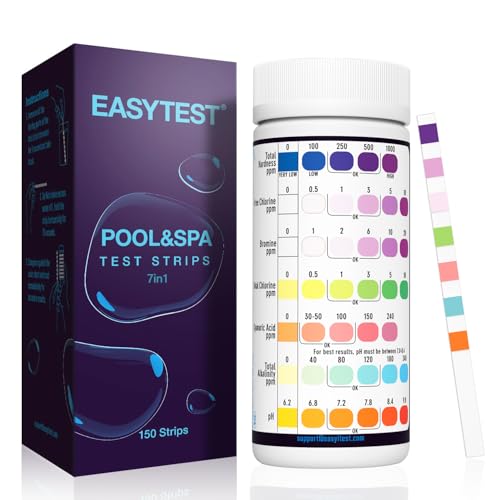
Multi-parameter test strips provide the fastest, most convenient method for day-to-day water quality monitoring. Products like the EASYTEST 7-Way Pool Test Strips allow spa owners to evaluate bromine, total alkalinity, pH, free chlorine, total hardness, cyanuric acid, and total chlorine simultaneously on a single pad assembly. High-quality testing strips feature dense fiber paper pads engineered to resist color bleeding, ensuring that the reagent dyes do not run into adjacent test zones while you read the results.
Modern testing kits often incorporate digital integration to eliminate human color interpretation errors. For example, the Spa Hot Tub Test Strips with App 6 in 1 from Bliss Spa pairs physical testing strips with a smartphone application that calculates exact chemical dosages based on your recorded values. Other value packs, such as the 7-Way Pool Test Strips from LIME POOL, provide over 160 testing strips with distinct color gradation charts on the exterior bottle label. These multi-pad tools deliver immediate feedback so you can identify chemical deficiencies before water clarity suffers.
Specialized Testing for Mineral and Proprietary Sanitizing Systems
Not all hot tubs rely solely on traditional granular chlorine or bromine pools of sanitizer. Sanitizing platforms like the FROG @ease system utilize mineral technology paired with SmartChlor cartridges, requiring dedicated testing strips tailored to their unique chemistry. The FROG @ease Test Strips for Hot Tubs and Swim Spas are calibrated specifically to read SmartChlor levels rather than standard free chlorine residuals.
Standard chlorine test strips measure free available chlorine, which typically shows low or undetectable levels in a mineral-based system because SmartChlor maintains a self-regulating reserve. Using standard test strips on a FROG system will prompt owners to add unnecessary sanitizer, creating chemical imbalances. With dedicated system strips, an immediate color match confirms whether the cartridge is actively releasing sanitizer or requires replacement, while simultaneously measuring total alkalinity, pH, and hardness.
Step-by-Step Sample Collection and Strip Reading Technique
Accurate testing results depend directly on how you collect the water sample from your spa. Always submerge the test strip elbow-deep, roughly twelve to eighteen inches below the surface, to capture water that represents the bulk volume rather than surface tension film. Avoid sampling directly in front of the return jets, the ozone injector outlet, or the skimmer intake where chemical concentrations can be artificially distorted.
Dip the test strip into the water for exactly one to two seconds, depending on the manufacturer instructions printed on the bottle. Remove the strip smoothly without shaking off excess water, as vigorous shaking can wash away the reactive indicator reagents from the testing pads. Hold the strip horizontally for fifteen seconds to allow the chemical reaction to develop while preventing water from running between color zones.
Always compare the pads against the printed color chart on the bottle under natural daylight. Artificial indoor lighting, tinted patio covers, or incandescent porch lights can significantly distort color perception, leading to false high or low readings. Ensure your hands are completely dry before reaching into the storage bottle to extract a strip, and snap the lid closed immediately to prevent ambient humidity from degrading the remaining supply.
The Critical Order of Balancing: Alkalinity First, pH Second
Interpreting your test results is only half the battle; knowing which chemical to adjust first prevents wasted time and cloudy water. Always adjust total alkalinity before attempting to correct your pH reading. Because alkalinity serves as the alkaline buffer for the water, raising or lowering alkalinity will naturally pull the pH level along with it. If you attempt to balance pH while alkalinity remains severely out of range, the pH will quickly revert back to its previous imbalanced state.
Comprehensive balance packages like the Bio Ouster Hot Tub Water Balancing Kit supply individual containers of Alkalinity Increaser, pH Up, and pH Down. If your alkalinity test pad reads below 80 ppm, add sodium bicarbonate increments to raise the buffer capacity. Once total alkalinity stabilizes within the 80 to 120 ppm window, retest the water to evaluate your pH. In many instances, bringing total alkalinity into its proper range will automatically guide pH toward the ideal 7.4 to 7.6 target.
Protecting the spa environment during chemical balancing also involves equipment maintenance. Using an insulated, durable hot tub cover with warranty coverage helps retain heat while stabilizing the water column between adjustments. Run the primary circulation pump on low speed with the air venturi controls closed when dissolving balancing chemicals to prevent rapid outgassing of carbon dioxide, which can unintentionally drive pH levels upward.
Sanitizer Verification and Shock Treatment Protocols
Sanitizer residual is your primary defense against harmful bacteria, algae, and organic contaminants introduced by bathers. When using chlorine-based systems, your test strip should register between 3.0 and 5.0 ppm of free chlorine. Granular products like the HTH Spa 86134R Clear Chlorinating Sanitizer dissolve quickly in hot water to restore target sanitizer levels without leaving insoluble sediment on the spa floor.
If your test strips display a split between free chlorine and total chlorine, combined chlorine or chloramines have accumulated in the water. Chloramines form when free chlorine binds with sweat, body oils, and cosmetics, generating an irritating chemical odor and reducing sanitation power. When total chlorine exceeds free chlorine by more than 0.5 ppm, the hot tub requires an oxidizing shock treatment to break the chloramine bonds and restore active sanitation.
Wait at least twenty to thirty minutes with the spa cover off after administering an oxidizing shock before taking another chemical reading. High concentrations of oxidizers can temporarily skew test pads, resulting in false readings. Once the sanitizer stabilizes and the bather load clears, installing a lightweight, foldable hot tub cover design prevents external organic debris like leaves and pollen from depleting your sanitizer reserves prematurely.
Diagnosing Inaccurate Test Strip Readings and Indicator Bleaching
One common diagnostic puzzle occurs when a hot tub smells strongly of chlorine, yet the test strip reads zero ppm for free sanitizer. This phenomenon happens when sanitizer levels are exceptionally high, typically exceeding 10 to 15 ppm following an overzealous shock treatment. Extremely high chlorine or bromine concentrations bleach the reagent dyes on the test pad before the color can develop, leaving the pad completely white and mimicking a zero reading.
To verify whether indicator bleaching is occurring, dilute a small sample of your spa water with an equal volume of distilled tap water and retest the mixture. If the diluted sample suddenly displays a vibrant purple or dark yellow color, your actual tub concentration is dangerously high. Another common cause of inaccurate results is expired testing strips; test strips usually expire ninety days after opening because exposure to air and moisture breaks down the chemical reagents.
Store your test strips in a cool, dry cabinet away from direct sunlight, high heat, and equipment bay humidity. Never leave the test strip bottle sitting on the spa shell rim where condensation can penetrate the cap seal. Discard any bottle that shows signs of moisture clumping or where unused pads appear discolored before dipping.
Testing Frequency Schedules for Home Spas and High-Bather Loads
Consistency is essential when maintaining safe, sanitary hydrotherapy water. For standard residential hot tubs used two to three times per week, testing chemicals twice weekly is sufficient to maintain stable water parameters. Make it a habit to check the water before entering the spa to verify bather safety, and test again twenty-four hours after heavy usage to determine if additional sanitizer is required.
Spas installed at short-term vacation rentals or properties hosting frequent social gatherings demand daily testing. High bather loads rapidly introduce organic matter, which consumes available sanitizer within hours and drives pH downward. Checking parameters on a daily schedule ensures that sanitizer reserves never drop to zero, preventing cloudy water and bacterial blooms before they take hold.
Always record your test readings in a simple maintenance notebook or within a digital spa tracking app. Tracking your chemical trends helps you anticipate when the water is becoming saturated with dissolved solids. When total dissolved solids exceed safe thresholds, typically every three to four months, balancing chemicals become less responsive, signaling that it is time for a complete drain and refill cycle.
Learning how to check hot tub chemicals accurately empowers you to take control of your spa maintenance without relying on guesswork or costly trial and error. By using reliable multi-parameter test strips, observing strict dipping techniques, and balancing alkalinity before adjusting pH and sanitizers, you create a pristine soaking environment that protects your equipment and enhances every hydrotherapy session. Consistent testing safeguards your investment, keeping your water crystal clear and ready for relaxation all year long.


Write Your Review
No reviews yet. Be the first to share your experience!