


Stepping into a properly heated spa after a strenuous afternoon offers immediate tension relief and targeted muscle recovery. Understanding how to change hot tub temperature ensures that your spa operates efficiently while maintaining safe water conditions for every bather. Most modern electronic topside keypads allow straightforward set-point adjustments with single-touch arrows, but operational modes, ambient weather, and thermal accessories directly influence how rapidly the water warms up. Pairing responsive controls with a durable yard patio hot tub cover helps maintain your preferred water warmth without driving up monthly electric utility bills.
Water heating demands a balance between therapeutic heat and thermal safety, with the standard industry threshold capped at 104 degrees Fahrenheit. When an electronic controller refuses to register button presses or displays cryptic diagnostic symbols, adjusting water warmth can quickly become a frustrating ordeal. Faulty thermistors, improper filtration cycle programming, or locked panel modes often prevent the circulation pump and electric heater from reaching your desired target. Examining the interaction between topside inputs, operational heating cycles, and underlying water temperature sensors reveals how to achieve dependable hydrotherapy warmth throughout the seasons.
Mastering Spa Temperature Controls, Heating Modes, and Diagnostic Sensors
Regulating spa water warmth requires an understanding of topside keypad commands, heating modes, and thermal probe signals. While adjusting set points usually involves pressing arrow keys, the heating sequence relies on communication between the circuit board, flow sensors, and submerged thermistors. When temperature controls fail to respond or deliver inconsistent warmth, identifying the underlying cause ensures reliable soaking comfort year round.
Standard Topside Keypad Temperature Adjustments
Most modern portable hot tubs feature digital topside control keypads with clear displays that show current water temperature by default. To adjust the heat setting, press either the Warm or Cool arrow button once to trigger the flashing set-point display. Press the desired arrow button until your target appears, then release it to let the system confirm your selection.
Some spa control panels use a single Temperature button rather than distinct Up and Down keys. On these interfaces, pressing the button causes the temperature reading to flash and adjust in one direction. Pausing for several seconds and pressing the button again reverses direction, allowing you to alternate between raising and lowering the target.
Keypad lock modes represent a frequent obstacle when attempting to modify water warmth. Manufacturers include partial locks that restrict temperature changes while allowing jet operation, as well as full panel locks that disable all inputs. Unlocking the system typically requires a quick button sequence, such as pressing the Temperature button followed by the Light or Jets key.
Deciphering Spa Heating Modes and Operating Schedules
Adjusting your spa set point will not immediately engage the heating element if the control pack is configured in an energy-saving profile. Most systems operate across distinct modes, commonly labeled as Standard (or Ready) and Economy (or Rest). In Standard mode, the heater engages whenever water warmth drops below the set point, maintaining continuous heat around the clock.
In contrast, Economy or Rest mode restricts water heating exclusively to programmed filtration cycles. If your spa filters water for two hours twice daily, heating only occurs during those designated windows. Adjusting set points while in Rest mode registers on the display, but the heater stays off until the next cycle begins unless switched back to Standard mode.
Electrical circuit capacity also dictates how heating elements operate when hydrotherapy pumps run at high speed. Standard 110-volt or 120-volt plug-and-play spas operate on dedicated 15-amp or 20-amp circuits, which cannot power a heater and high-speed pump simultaneously. In contrast, hardwired 230-volt spas wired to 50-amp breakers supply enough current to operate multi-kilowatt heaters continuously alongside dual therapy pumps.
Safe Thermal Limits and Energy Efficiency Guidelines
Industry safety guidelines established by Underwriters Laboratories mandate that hot tubs never exceed a maximum water temperature of 104 degrees Fahrenheit (40 degrees Celsius). Soaking in water above this limit introduces severe risks of hyperthermia, dizziness, and cardiovascular distress. Most spa keypads include software limits preventing settings above 104 degrees, while maintaining 100 to 102 degrees provides comfortable hydrotherapy without causing fatigue.
Maintaining energy efficiency while altering water warmth requires consistent heat retention habits. Allowing water warmth to drop substantially between weekly soaks often consumes more electrical energy to reheat than maintaining a steady baseline temperature. Installing an insulated oversized hot tub cover prevents evaporative heat loss, which accounts for the vast majority of thermal escape in outdoor spas.
Lowering the set point makes practical sense when leaving the spa unattended during extended vacations. Reducing the set point to 80 or 85 degrees Fahrenheit keeps water circulating while lowering monthly power usage. However, in freezing winter climates, complete thermal shutdowns risk burst plumbing manifolds, making automated freeze protection essential whenever outdoor temperatures drop near freezing.
Troubleshooting Unresponsive Temperature Controls
When pressing topside keys fails to change the displayed temperature, several mechanical or electrical faults may be interrupting the circuit. A common culprit is a tripped high-limit thermostat, which functions as an emergency safety cutoff to prevent heater dry firing. If water flow through the heater tube falls below safe thresholds, the high-limit switch trips and disconnects power until manually reset.
Dirty filter cartridges represent another frequent cause of temperature regulation failure. Trapped organic debris and mineral scale restrict water circulation through the canister, triggering diagnostic error codes such as FLO or DR on the topside screen. Removing and rinsing the pleated cartridge filter often clears flow errors immediately, allowing the heater to resume tracking toward your set point.
Electrical power issues can also cause topside keypads to freeze or fail to register commands. Nuisance tripping at the dedicated GFCI breaker or loose ribbon cable connections between the keypad and main circuit board frequently mimic hardware failures. Before handling internal circuit board components, always disconnect electrical power at the main panel and the dedicated GFCI disconnect switch located near the spa.
Identifying Faulty Temperature Sensors and Watchdog Codes
Modern electronic hot tubs rely on precision thermistors to monitor water warmth and regulate heating cycles. These sensors consist of temperature-sensitive resistors sealed inside metal bulbs that sit directly in the water stream or filter well. If a sensor drifts out of calibration or suffers an internal short, the control board can no longer track true water warmth, leading to erratic heating or complete system lockouts.
On Sundance Spas and Jacuzzi hot tubs, a failing water temperature sensor or high-limit thermistor triggers a distinctive watchdog error. This failure mode displays as four horizontal dashes (” – – – – “) on the topside screen, accompanied by an immediate equipment shutdown. The watchdog circuit is engineered as a vital fail-safe to prevent dangerous overheating when sensors report contradictory thermal readings, requiring prompt component inspection.
Diagnosing a defective sensor involves testing its electrical resistance with a standard digital multimeter set to ohms. At standard ambient water temperatures around 77 degrees Fahrenheit (25 degrees Celsius), a functional Jacuzzi or Sundance sensor typically reads approximately 30,000 ohms. A reading of zero ohms points to an electrical short, while infinite resistance indicates an open circuit, confirming that the probe must be replaced.
Replacing a Sundance and Jacuzzi Temperature Sensor
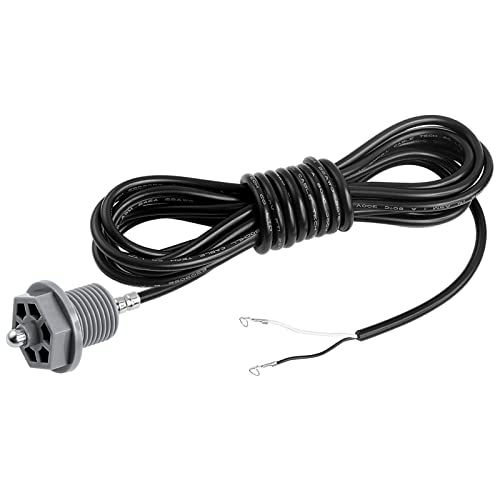
Replacing a defective sensor restores normal temperature adjustment functions and clears watchdog error codes on compatible spa models. The aftermarket 6600-166 temperature sensor by XMK is designed to replace original Jacuzzi and Sundance sensors, featuring curled finger connectors that attach directly to circuit board terminals. This sensor matches numerous Jacuzzi and Sundance models, including J-300 series and 680 series tubs, and includes a replacement 6540-228 O-ring.
Before beginning the replacement, shut off electrical power at the main breaker panel and verify zero voltage at the spa control box with a reliable voltage detector. Lower the spa water below the sensor fitting, or use expanding plugs inside the shell to prevent water loss during the swap. Access the equipment compartment by removing cabinet skirt panels to expose the plumbing.
Routing the new wire through the cabinet framing is made significantly simpler by using the existing cable as a pull line. The XMK replacement sensor includes 12-foot wires, providing ample reach from the sensor well location to the main circuit box. Taping the old wire to the new curled finger lead allows you to pull the replacement smoothly through the interior cabinet foam.
Once the new wire reaches the control box, insert the sensor bulb into the shell well, securing it in place with the fresh 6540-228 O-ring. Connect the curled finger terminals onto the designated sensor posts on the circuit board, ensuring solid mechanical contact. Refill the tub, inspect the fitting for leaks, and restore power at the GFCI breaker so the topside screen can resume normal operation.
Thermal Recovery Dynamics and Seasonal Management
The speed at which a hot tub responds to an adjusted set point depends heavily on system wattage, water volume, and ambient climate conditions. A standard 230-volt hot tub utilizing a 4-kilowatt heating element typically warms water at 3 to 6 degrees Fahrenheit per hour. In contrast, a 110-volt plug-and-play unit equipped with a 1-kilowatt heater experiences slower recovery, often climbing just 1 to 2 degrees per hour.
Cold ambient temperatures increase thermal losses during the warming process. When frigid winter air contacts an open water surface, heat dissipates into the atmosphere nearly as fast as an electric element can generate it. Keeping a secure, foldable hot tub cover strapped down during the heating cycle creates an insulated thermal barrier that traps rising heat and speeds up recovery.
Seasonal temperature planning involves choosing realistic targets that match outdoor environmental conditions. During hot summer months, bathers frequently lower water warmth to 95 or 98 degrees to create a refreshing soak rather than an intensely hot experience. In deep winter, setting the spa to 102 or 104 degrees delivers the therapeutic warmth needed to combat freezing outdoor temperatures while keeping plumbing lines protected.
System Verification and Post-Adjustment Thermal Testing
After adjusting your hot tub temperature or replacing a faulty thermistor, verifying system accuracy ensures bather comfort and mechanical reliability. Allow the circulation pump to run for twenty minutes so that water in the plumbing lines blends thoroughly with the footwell water. Submerge an independent pool thermometer in the center of the tub, comparing its reading to the number displayed on the topside screen.
If the independent thermometer reading diverges significantly from the topside display, the temperature sensor may require repositioning within the sensor pocket. Ensure that thermal wells are free of trapped air pockets, mineral scale, or debris that could insulate the probe from actual water warmth. Verifying that the heater contactor shuts off cleanly when water reaches your set point confirms that safety circuits operate correctly.
Balancing convenient topside temperature adjustments with dependable thermal hardware keeps your hot tub ready for hydrotherapy whenever relaxation is needed. Whether you are switching between economy heating schedules, establishing seasonal set points, or replacing a worn thermistor to clear topside watchdog errors, methodical maintenance prevents unexpected soaking disruptions. Understanding the connection between your keypad commands, heating elements, and internal temperature probes ensures years of safe, energy-efficient spa enjoyment.






Write Your Review
No reviews yet. Be the first to share your experience!