

Maintaining balanced spa water chemistry requires knowing exactly how chemical treatments interact with limited water volume and elevated heat. When water becomes cloudy or develops a persistent odor, many spa owners wonder how much pool shock for hot tub maintenance is safe to use without damaging internal plumbing or delicate acrylic finishes. A standard residential spa holds between 300 and 500 gallons, meaning standard swimming pool chemical measurements are far too concentrated and can quickly overwhelm the balance. Investing in a protective spa cover with warranty safeguards your water from external debris, but proper chemical dosing remains the foundation of a clean and comfortable soak.
Applying the correct dosage depends heavily on whether you choose a chlorine-based sanitizer or an oxygen-based non-chlorine oxidizer. Adding approximately one to two tablespoons per routine treatment is typical for most mid-sized spas, though heavy bather loads or stubborn organic buildup will naturally require targeted adjustments. Learning how to measure these treatments accurately prevents eye irritation, protects internal heaters, and extends the operational lifespan of your entire hot tub system.






Calculating and Applying the Proper Shock Dosage for Hot Tubs
Calculating the correct chemical dose for a hot tub requires understanding water volume, sanitizer type, and organic waste accumulation. For most standard residential spas containing 300 to 500 gallons of water, a routine dose of non-chlorine shock oxidizer ranges from one to two tablespoons (approximately 0.5 to 1.0 ounce). When utilizing a chlorinated shock treatment, approximately one tablespoon (0.5 ounce) per 300 gallons is standard to reach breakpoint chlorination. Applying excess treatment risks shell damage and skin discomfort, while under-dosing leaves resilient bacteria and chloramines active in your plumbing lines.
The Critical Distinction Between Swimming Pool Shock and Spa Formulations
Swimming pool shock treatments are engineered for large bodies of water that typically range from 10,000 to 25,000 gallons. In contrast, portable hot tubs contain a fraction of that water, creating a tight environment where chemical overdoses escalate rapidly. Adding standard pool shock directly from a bucket without precise measuring can spike free sanitizer levels to hazardous concentrations within minutes. Spa-specific shock treatments are blended to dissolve rapidly in heated water, ensuring swift dispersal throughout the plumbing manifolds.
Many traditional swimming pool shock products utilize calcium hypochlorite as their primary active ingredient. While effective in vast outdoor pools, calcium hypochlorite deposits significant amounts of calcium directly into the water. When heated to normal spa temperatures of 100 to 104 degrees Fahrenheit, excess calcium rapidly falls out of solution and creates crusty scale along internal heating elements and jet barrels. Specialized spa oxidizers, such as potassium peroxymonosulfate or stabilized sodium dichlor, avoid unwanted calcium additions entirely.
Cyanuric acid accumulation represents another significant challenge when using generic pool formulations in a hot tub. Trichloro-s-triazinetrione (trichlor) and certain stabilized dichlor pool shocks contain cyanuric acid to protect chlorine from ultraviolet sunlight degradation. In an enclosed, heated spa, cyanuric acid does not dissipate, accumulating with every chemical application until chlorine lock occurs. When cyanuric acid exceeds 100 parts per million, sanitizers lose their oxidizing efficacy, requiring a complete spa drain and refill.
Calculating Accurate Shock Dosing Based on Spa Gallonage
Accurate chemical dosing begins with knowing the exact water capacity of your specific hot tub model. You can locate your spa volume in the manufacturer user manual or by calculating the interior dimensions of the footwell and seating areas. A compact two-person or three-person tub typically holds between 200 and 300 gallons of water. Mid-sized four-person to six-person spas generally hold 350 to 450 gallons, while oversized party spas and compact swim spas can easily hold 500 to 1,000 gallons.
For routine maintenance using granular oxygen-based shock oxidizers, measure roughly one tablespoon per 250 gallons of water. If your spa holds 400 gallons, one and a half to two tablespoons provides sufficient oxidizing strength to refresh the water. Using a dedicated measuring scoop prevents accidental overdoses that could throw off your overall water balance. Always round down slightly rather than guessing larger amounts, especially when treating smaller 110-volt plug-and-play models with limited water volume.
Bather load substantially alters your chemical requirements and calls for targeted dose adjustments. Every person who enters a hot tub introduces sweat, cosmetic residue, lotions, and dead skin cells into the warm water. A spa used by four adults for an hour requires nearly double the oxidizing power of a solo ten-minute soak. When facing cloudiness after heavy entertaining, adjusting the dose to two tablespoons per 300 gallons helps oxidize organic bather waste effectively.
Chlorine Shock Versus Non-Chlorine Oxidizers
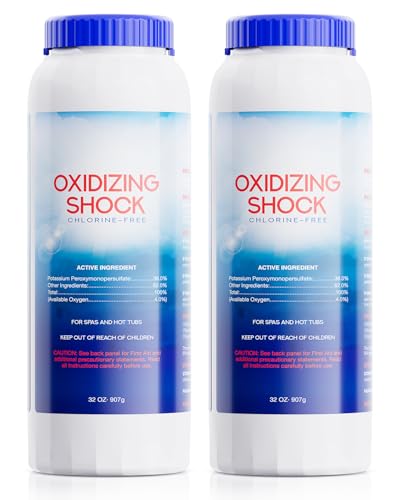
Choosing between chlorine shock and non-chlorine shock depends on whether your goal is sanitizing live pathogens or oxidizing organic debris. Non-chlorine oxidizers, based on potassium peroxymonosulfate (MPS), react quickly to destroy chloramines, dead algae, and bather waste without elevating chlorine parts per million. Formulations such as the AquaDoc Non Chlorine Hot Tub Shock and POOLHOUR 32 Oz Chlorine-Free Hot Tub Shock dissolve rapidly directly in circulating water. These treatments allow hot tub owners to refresh water quality without creating heavy chemical fumes or prolonged waiting periods.
Chlorinated shocks serve as powerful biocides that eliminate bacteria, viruses, and established algae blooms. Multi-purpose treatments like SpaGuard Enhanced Shock combine sanitizing agents with clarifiers and buffering compounds to restore water clarity in heavily contaminated tubs. Chlorinated treatments raise free available chlorine sharply to burn through organic waste and break down combined chlorine molecules. While essential for clearing cloudy water or periodic sanitizing resets, chlorine shocks require longer waiting times before bathers can safely return to the water.
Compatibility with your existing sanitizing foundation is an essential factor when selecting an oxidizing shock. Non-chlorine shocks like the AquaJoyer Non-Chlorine Spa Shock for Hot Tub work harmoniously with chlorine, bromine, ozone, and saltwater generation systems. Bromine users benefit particularly from non-chlorine oxidizers because the MPS chemical reaction reactivates dormant bromide ions into active hypobromous acid. This regenerative reaction restores sanitizing protection without introducing unwanted stabilizer compounds or conflicting chemical bases.
Step-by-Step Procedure for Safely Adding Shock to Hot Tub Water
Proper shock application begins with safety preparations and mechanical equipment verification. First, switch the hot tub jets to low-speed circulation or run a standard filtration cycle to ensure continuous water flow. Turn off any auxiliary air diverter valves and air injection blowers, as vigorous surface bubbling causes chemical granules to outgas into the air prematurely. Always remove the spa cover completely before measuring chemicals to protect internal cover fabrics from corrosive vapors.
Carefully measure your dry shock granules using a clean, dedicated chemical scoop away from facial draft lines. Never pre-mix shock oxidizers with warm water inside an enclosed bucket, as concentrated gas pressure can build up unexpectedly. Instead, sprinkle the measured granules slowly and evenly across the active water surface directly over the discharge jets. This broad distribution pattern ensures that fast-dissolving products like the 2LB Chlorine-Free Hot Tub Shock Oxidizer blend immediately into the full water column.
Leave the hot tub cover fully open for at least twenty to thirty minutes after introducing the shock treatment. Allowing chemical off-gassing into open air protects sensitive marine vinyl and underside vapor barriers from corrosive degradation. If your spa sits exposed beneath an outdoor patio hot tub cover, propping the cover open prevents acidic chemical vapors from becoming trapped against the water line. Once the off-gassing window passes, you can return the circulation system to its baseline schedule.
Balancing Water Chemistry Parameters Before Shock Application
Shock treatments cannot function efficiently if baseline water chemistry parameters sit outside balanced ranges. Total alkalinity acts as a chemical buffer that stabilizes your water against severe pH fluctuations. Maintain total alkalinity between 80 and 120 parts per million using sodium bicarbonate before measuring your shock dosage. When alkalinity falls too low, the water becomes corrosive and causes erratic pH spikes that diminish the oxidizing efficiency of shock chemicals.
Water pH must be maintained between 7.2 and 7.8 to ensure optimal sanitizer efficacy and equipment protection. If your pH climbs above 7.8, chlorine-based shock loses more than half of its killing capability, requiring larger doses to achieve clarity. Conversely, acidic water below 7.2 accelerates equipment corrosion and causes acute skin and eye stinging for bathers. Buffered shocks like the SpaGuard Enhanced Spa Shock 6lbs help mitigate minor pH shifts during treatment, but testing beforehand remains necessary.
Calcium hardness levels between 150 and 250 parts per million protect internal metal components and shell finishes. Soft water lacking calcium leaches minerals aggressively from heater housings, pump seals, and copper heat exchangers. On the other hand, excessively hard water combined with shocking agents leads to cloudy precipitation and gritty surface scaling. Testing baseline parameters using reliable liquid test kits or multi-factor test strips ensures every shock application performs as intended.
Managing Chloramines, Organic Buildup, and Treatment Frequency
Cloudy water and pungent chemical odors are almost always caused by combined chlorine compounds known as chloramines. Chloramines form when active free chlorine binds with ammonia and nitrogenous waste from bather sweat, oils, and urine. These spent sanitizer compounds irritate eyes and lungs while providing virtually zero biological disinfection in the water. High-volume spas and short-term vacation rentals experience chloramine buildup rapidly due to frequent, high-density bather turnover.
Eliminating chloramines requires achieving breakpoint chlorination, where the concentration of oxidizer is high enough to tear apart the chemical bond. To reach breakpoint chlorination with chlorine shock, you must raise free chlorine to ten times the level of combined chlorine present. Alternatively, adding an oxygen-based shock oxidizer burns away the nitrogenous bather waste without requiring complicated breakpoint mathematical calculations. Regular oxidation keeps free sanitizer active and ready to defend against new contaminants.
Establish a consistent shocking schedule tailored to your household usage patterns rather than treating reactively. For light usage involving one or two bathers a couple of times per week, a single non-chlorine shock dose weekly is sufficient. For spas experiencing daily hydrotherapy sessions or weekend group gatherings, adding one tablespoon after each use maintains crystal clarity. Regular light maintenance doses prevent large organic blooms from overwhelming your pleated cartridge filters.
Preventing Equipment Damage and Cover Degradation from Over-Shocking
Adding excessive shock to a hot tub causes severe mechanical, aesthetic, and structural consequences over time. High sanitizer concentrations create an aggressive acidic environment that bleaches cast acrylic shells and fades printed surfaces. Padded headrests, soft neck pillows, and perimeter control dials quickly become brittle, cracked, and discolored under severe chemical exposure. Restricting shock doses to recommended label guidelines preserves internal cosmetic finishes and prevents expensive component replacements.
Internal plumbing components and heating elements are particularly vulnerable to chemical corrosion from chronic overdosing. Excessive chlorine levels degrade rubber O-rings, pump mechanical shaft seals, and plumbing union gaskets, leading to slow cabinet leaks. Titanium and Incoloy electric heating elements suffer localized pitting corrosion when exposed to high oxidizer concentrations in hot water. Repairing corroded wet ends or replacing burned heater assemblies costs substantially more than practicing careful chemical measurement.
Thermal spa covers absorb corrosive off-gassed vapors whenever chemicals are applied with the cover closed. Acidic vapors penetrate stitched vinyl seams, breaking down the water-resistant vapor barrier surrounding the dense expanded polystyrene foam core. Over time, moisture and chemical gas saturate the core, making the cover heavy, waterlogged, and thermally inefficient. Utilizing a lightweight foldable hot tub cover makes routine removal and proper ventilation effortless during every shock treatment.
Post-Treatment Testing and Safe Soaking Timeframes
Determining when it is safe to re-enter your hot tub depends entirely on the type of shock treatment applied. Oxygen-based non-chlorine shocks require only a brief circulation period before the water is comfortable for soaking. Products such as POOLHOUR non-chlorine oxidizer allow bathers to return safely after running circulation jets for approximately fifteen to twenty minutes. Because potassium peroxymonosulfate does not raise active sanitizer residuals to toxic levels, prolonged waiting periods are completely unnecessary.
Chlorinated shock treatments demand substantially more patience before you can resume hydrotherapy sessions. After applying a heavy dose of chlorinated shock, free available chlorine often surges above ten parts per million. Entering water with sanitizer levels that high causes severe skin drying, respiratory irritation, and bleached swimwear. Keep the hot tub uncovered and allow the circulation system to run until free chlorine drops back into the safe soaking window of three to five parts per million.
Always verify water safety using reliable test strips or a liquid chemical test comparator before stepping into the spa. Check that free chlorine registers between three and five parts per million, or bromine registers between three and six parts per million. Confirm that pH remains balanced between 7.2 and 7.8 to ensure soothing bather comfort and skin safety. Establishing these methodical testing habits guarantees every soak remains clean, relaxing, and completely restorative.





Write Your Review
No reviews yet. Be the first to share your experience!