

Planning a backyard hydrotherapy retreat requires balancing electrical infrastructure, structural load capacity, and ongoing water treatment before deciding on a specific model. Many prospective spa owners assume that luxury acrylic shells are the only worthwhile option, while others lean toward portable vinyl designs to avoid complex contractor installations. Deciding what type of hot tub is best for your property depends directly on how you plan to use the vessel, the local winter climate, and your available electrical service. Investing in suitable site preparation and paired accessories like yard patio spa covers ensures that standby thermal loss stays manageable regardless of whether you choose a lightweight inflatable model or a permanently hardwired acrylic installation.
Operating a spa efficiently also demands an understanding of hydraulic performance, shell longevity, and dedicated sanitization chemistry. Routine maintenance items such as chlorinating granules, plumbing flush cleaners, and surface scum sponges help maintain clear water across every spa category. However, matching your budget and backyard layout to the right build style prevents costly surprises such as inadequate subpanel capacity or structural deck sagging. Exploring the distinct advantages of hard-shell acrylic units, rotomolded polyethylene spas, and portable plug-and-play vessels provides the clarity needed to make a dependable investment.

Pros
- Multifunctional formula eliminates the need to buy and measure separate clarifiers and line treatments
- No draining required, allowing you to return to soaking after just a two-hour waiting period
- Broad compatibility across acrylic spas, inflatable tubs, swim spas, and all common sanitizer types
- Helps clear internal plumbing buildup before it can form heavy deposits or waterline scum
Cons
- Does not replace your primary sanitizer, so chlorine, bromine, or alternative sanitizers must still be maintained
- The 8-ounce bottle only provides a four-week supply for a standard 500-gallon spa, requiring regular replenishment
- Causes temporary surface foaming for about 15 minutes right after running jets as the formula lifts residue
Bio Ouster Hot Tub Weekly Care is a multi-action chemical additive formulated to clean spa plumbing, clarify cloudy water, and condition bathwater without requiring a water change. Designed specifically for hot tub owners, vacation rental managers, and cold plunge users, this maintenance treatment addresses the hidden buildup that accumulates out of sight inside jet lines. For anyone looking to reduce waterline scum and keep spa water feeling soft between scheduled water changes, this routine additive simplifies weekly care.
Routine hot tub use continuously introduces body oils, cosmetics, sweat, and lotions into the water, which tend to coat internal pipe walls where standard filters cannot reach. Bio Ouster works by circulating through the plumbing lines to break down these deposits and suspend them for filtration, all while polishing water clarity. Because the formula conditions the water simultaneously, bathers often notice a silkier feel that is less drying to the skin during long soaking sessions.
The bleach-free formula is manufactured in the United States to protect spa components from premature wear or chemical degradation. It is safe for application in standard acrylic shells, vinyl-lined spas, portable inflatable hot tubs, swim spas, and even cold plunge units. Unlike harsh industrial line flushes, this gentle blend will not damage delicate jet gaskets, internal seals, or pump impellers when dosed according to manufacturer instructions.
Administering the treatment takes minimal effort and integrates easily into regular weekend spa maintenance. The manufacturer recommends adding 2 ounces per 500 gallons of water, running the jets on high for 30 seconds to distribute the solution, and allowing the spa to rest for two hours before use. A temporary surface foam may appear for roughly 15 minutes as the cleaner lifts residue, which is an expected part of the breakdown process and dissipates on its own.
While Bio Ouster simplifies water conditioning and line maintenance, spa owners must understand that it is not a sanitizer replacement. You must still test and maintain your free chlorine, bromine, or alternative sanitizer levels, as well as balance pH and alkalinity. Additionally, the 8-ounce container represents a starter supply that will only last four weeks in a typical 500-gallon spa, meaning long-term maintenance will require stocking up or purchasing larger refill sizes.
Bio Ouster Hot Tub Weekly Care is a practical investment for spa owners who want to prevent plumbing clogs and murky water without draining their tub every month. It pairs effectively alongside standard sanitizers and occasional deep-purge flushes. Before purchasing, verify your tub volume to ensure the 8-ounce bottle provides sufficient dosing for your planned maintenance schedule.
Bio Ouster 3in1 Weekly Care is designed for broad compatibility with virtually all modern hot tub sanitation setups. It operates safely alongside traditional chlorine, bromine, saltwater generators, mineral cartridges, ozone generators, UV systems, and biguanide programs.
The solution is also safe across diverse spa shells and materials, including acrylic spas, vinyl liners, rotationally molded plastic tubs, and inflatable hot tubs. It can also be used in jetted interior bathtubs and cold plunge systems to maintain clean water lines.

Pros
- Fast-dissolving sodium dichlor formula leaves minimal residue in heated spa water
- Specifically formulated for spa water temperatures and chlorine sanitizing systems
- Five-pound container provides a practical supply for ongoing routine water care
- EPA-approved formulation effectively targets algae growth and organic bather waste
Cons
- Designed strictly for chlorine-based setups and not compatible with non-chlorine or biguanide systems
- Continuous use gradually builds cyanuric acid in hot tub water, requiring standard periodic drain-and-refill cycles
- Requires careful dosing and routine water testing to avoid over-chlorination or chemical vapor buildup
Leisure Time Spa 56 Chlorinating Granules provide a dedicated sanitizing solution designed specifically for residential hot tubs and spas operating on chlorine water-care systems. Unlike standard swimming pool chemicals that may dissolve too slowly or alter chemistry unpredictably in small bodies of heated water, this formula is tailored for the high temperatures and rapid agitation of hot tubs. It suits first-time spa owners, vacation rental hosts, and established hot tub users seeking an EPA-approved sanitizer that maintains clean, clear water without complicated dosing steps.
Daily hot tub maintenance requires dependable control over organic waste introduced by bathers, including perspiration, body oils, and environmental residues. Spa 56 addresses these contaminants using fast-dissolving granules that disperse quickly across the water when circulation jets run. Rapid solubility is a significant advantage in acrylic spas because it minimizes the risk of undissolved chemical particles settling on the bottom shell or bleaching headrests and plastic fittings, helping to protect internal spa surfaces while re-establishing necessary sanitizer residual levels.
The active chemical agent in this formula is Sodium Dichloro-s-Triazinetrione Dihydrate, widely known as sodium dichlor. This stabilized chlorine compound resists degradation from heat and sunlight while providing active sanitizing power to clear cloudy water and inhibit algae growth. Packaged in a sturdy 5-pound bottle with exterior dimensions of 4.75 by 4.75 by 11.5 inches, this size offers an economical supply that minimizes frequent reordering for owners who use their spa regularly throughout the year.
Proper application habits are essential not only for water safety but also for the longevity of your hot tub cover and accessories. Whenever introducing chlorinating granules to the spa, the hot tub cover should remain fully off or folded back with circulation jets active for at least fifteen to twenty minutes. Allowing chemical vapors to off-gas freely prevents corrosive chloramine fumes from becoming trapped underneath the cover, which helps protect the underside vinyl, vapor barrier seals, and foam core from premature degradation.
While sodium dichlor provides reliable sanitizing performance, realistic chemical considerations come with its routine use. Dichlor naturally introduces cyanuric acid (CYA) as a stabilizing agent, meaning CYA levels will gradually rise over months of repeated dosing. Once stabilizer concentrations become elevated, chlorine efficiency drops, making periodic water drain-and-refill intervals necessary every three to four months. In addition, this product must never be mixed directly with alternative sanitizers such as bromine or biguanide systems.
Leisure Time Spa 56 is a reliable, practical choice for any hot tub owner maintaining a chlorine-sanitized spa environment. Before adding this product to your maintenance regimen, verify that your hot tub relies on a chlorine sanitizing routine, and keep a dependable test strip kit on hand to monitor free available chlorine, pH, and total alkalinity levels before dosing.
Consistent water sanitation with Leisure Time Spa 56 plays a key role in protecting the structural integrity of your hot tub accessories and cover. Unbalanced water or neglected sanitizing schedules can lead to organic buildup, scum lines, and mildew along cover skirts and headrests, while excessive chemical buildup can accelerate wear on acrylic surfaces and filtration media.
To ensure optimal water quality while safeguarding your spa components, always test water balance before adding granules and allow the tub to circulate with the cover open during initial dosing. Storing the 5-pound container in a cool, dry area away from direct sunlight will preserve granular potency and maintain reliable performance throughout the lifespan of the bottle.
Pros
- Effectively dislodges stubborn pipe residue and organic buildup prior to draining
- Improves jet performance and circulation efficiency throughout the entire plumbing system
- Helps eliminate recurring foam and chemical demand caused by dirty internal lines
- Compatible with both indoor and outdoor hot tubs as well as larger swim spas
Cons
- Requires a full water drain and shell wipe-down after the cleaning cycle is completed
- Not an in-use water treatment, so the hot tub cannot be used while the cleaner is circulating
- Very large swim spas or heavily neglected plumbing may require more than one 16-ounce bottle depending on dosing instructions
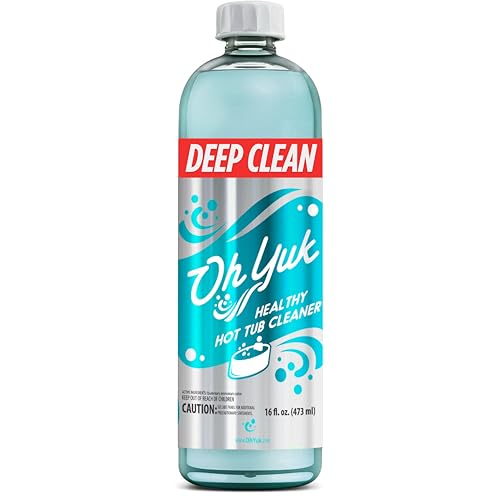
Oh Yuk Healthy Hot Tub Cleaner is a concentrated 16-fluid-ounce plumbing flush formulated to purge interior pipe walls, jet lines, and circulation fittings in indoor and outdoor hot tubs, portable spas, and swim spas. It is engineered specifically for homeowners, vacation rental operators, and regular spa owners preparing for a scheduled drain-and-refill cycle who want to eliminate the hidden organic waste that normal filtration and sanitizing tablets leave behind.
Hidden pipe buildup and accumulated body oils inside circulation lines are frequent culprits behind recurring cloudy water, surface foaming, and weakened jet pressure. By penetrating the interior plumbing pathways, this cleaner lifts and suspends embedded contaminants so they circulate out into the main footwell. This deep purge enables fresh water treatments to work much more effectively after refilling, since sanitizers no longer have to expend oxidation power fighting hidden line residue.
Circulation line maintenance directly benefits mechanical equipment by helping water move freely through pumps, heaters, and filter manifolds. When plumbing lines remain free of restrictive film and buildup, circulation pumps operate with less backpressure, allowing filter cartridges to trap suspended solids cleanly and consistently without unnecessary mechanical strain.
Using a plumbing cleaner requires timing your application around a complete water change, as the dislodged residue must be drained from the spa shell after running the jets. Hot tub owners should expect to wipe down the acrylic surface and water line once the tub empties, removing any residual oils before rinsing and refilling with fresh tap water.
While the 16-ounce bottle provides convenient handling for standard backyard spas, owners of oversized swim spas or tubs with years of neglected plumbing should check manufacturer dosage directions to ensure adequate volume. Furthermore, this product is designed purely as an evacuation flush before draining, meaning bathers must wait until the tub is emptied, rinsed, and refilled with fresh, balanced water before soaking.
For spa owners battling persistent water cloudiness or those establishing a dependable seasonal maintenance schedule, Oh Yuk Healthy Hot Tub Cleaner delivers a practical way to reset circulation lines. Verifying your spa water capacity and having clean towels or sponges ready to wipe the shell after draining ensures a smooth cleaning process and pristine water for your next soak.
Using Oh Yuk Healthy Hot Tub Cleaner is most effective when coordinated with your regular quarterly drain-and-refill schedule. Remove your filter cartridges prior to running the cleaner through the system to avoid trapping heavy dislodged gunk inside your primary filter pleats.
Turn on all jet pumps and allow the cleaner to circulate thoroughly through all plumbing lines according to the manufacturer label directions. Once the cleaning cycle finishes, drain the spa completely and wipe down the acrylic shell to remove any lifted oils and residue before refilling with fresh water.

Pros
- Passively collects surface oils and cosmetic residues without requiring tools, power, or installation
- Helps reduce waterline scrubbing and keeps spa filter cartridges cleaner between deep rinses
- Simple to maintain by rinsing with fresh tap water and squeezing out trapped residues
- Includes two reusable sponges in a single package for rotation across routine soak cycles
Cons
- Naturally discolors and turns brownish-gray as it traps grime, which can look unsightly over time
- Requires frequent rinsing and manual squeezing during periods of heavy bather usage
- Does not replace fundamental water care, chemical sanitization, or periodic shock treatments
The Rola-Chem Scumbug 2-Pack is a passive surface-cleaning sponge designed to capture floating body oils, lotions, pollen, and environmental residues in residential hot tubs, swim spas, and pools. For spa owners, bather waste such as sunscreens, skin conditioners, and natural body oils quickly rises to the surface, creating an unsightly grime line along the acrylic shell. This floating bug-shaped absorber targets that floating residue immediately, making it a practical tool for families, vacation rental hosts, and daily spa users who want to keep water surfaces clean with minimal manual labor.
In daily hot tub maintenance, floating scum absorbers help protect both water clarity and filtration components. When oils collect on the surface, they eventually coat the cartridge pleats of your spa filter or bake onto the tub shell at the waterline, requiring abrasive scrub pads or specialized cleaning sprays. By floating freely on the water or sitting inside the skimmer well, the Scumbug collects these contaminants continuously. The manufacturer highlights that the absorber can hold up to 40 times its weight in oils and scum without obstructing water flow or restricting filtration plumbing.
The construction relies on a porous, oil-attracting sponge material fabricated in an identifiable bug silhouette. Weighing less than an ounce, the lightweight white sponge floats easily on top of turbulent or still water. Its open-cell matrix is engineered specifically to draw in oily hydrophobic substances while allowing water to pass through. While the listed shipping dimensions are approximately 8 x 8 x 8 inches for the two-pack packaging, the sponges themselves are sized to float unobtrusively in the corner of a spa without interfering with bathers during routine soaking sessions.
Day-to-day operation is straightforward and requires virtually no installation. Owners simply toss one Scumbug into the hot tub water or place it inside the skimmer weir where water flow naturally directs floating film. Routine maintenance involves pulling the sponge out periodically, rinsing it thoroughly with fresh tap water, squeezing out the trapped grime, and tossing it back into the spa. Because this package includes two absorbers, owners can easily keep one active in the water while the other is being cleaned and dried.
Hot tub owners should keep in mind that a scum absorber is a supplementary cleaning tool rather than a substitute for chemical sanitization. The Scumbug will not balance pH, sanitize bacteria, or eliminate heavy organic loads that require oxidizing shock treatments. Additionally, as the white sponge absorbs heavy cosmetics, tanning oils, and pollen, it will visibly discolor and turn dark, which is normal but may look unappealing if left floating during social gatherings. In tubs with strong surface suction, the sponge may occasionally drift over the drain grate if not kept inside a skimmer basket.
For spa owners seeking a simple way to minimize waterline scrubbing and keep filter cartridges cleaner between deep rinses, the Rola-Chem Scumbug two-pack offers excellent practical utility. It provides a low-cost, reusable defense against cosmetic film and scum rings in acrylic spas, cedar hot tubs, and inflatable models alike. Before purchasing, verify your preferred placement strategy, whether floating free in the bathing area or tucked safely inside your filter compartment for out-of-sight oil collection.
Maintaining the Rola-Chem Scumbug requires only a few minutes of attention during weekly hot tub water checks. When the sponge becomes discolored or feels slick with accumulated body oils, remove it from the spa and rinse it under warm running tap water. Squeeze the sponge firmly between your hands to release the trapped oils and grime, repeating the rinse cycle until the runoff runs clear.
Avoid washing the Scumbug with harsh laundry detergents, bleach, or automated washing machines, as household soaps can introduce residual foam into your hot tub water. Once thoroughly rinsed and gently squeezed dry, the sponge can be returned directly to the water. Rotating between the two sponges provided in the pack extends the functional life of each unit across an entire soaking season.
Using an oil-absorbing sponge works alongside your existing sanitizer routine to reduce the demand on chemical treatments. By passively removing organic oils, lotions, and environmental pollen from the surface, the Scumbug prevents these contaminants from reacting with chlorine or bromine sanitizers. This reduction in organic load can help keep your water clearer and reduce the formation of surface foam caused by cosmetic residues.
To get the best performance without interfering with bathers, place the Scumbug inside the skimmer basket or filter bay where water naturally circulates. If left floating free in the main tub, consider removing it temporarily while entertaining guests to prevent it from tangling in jet streams or drifting into bather seating areas.

Pros
- Includes a specialized insulated cover engineered to retain water heat and reduce electrical operating demand
- Integrated Freeze Shield protects internal pump mechanics and water channels when overnight temperatures drop
- Bestway Connect app integration allows remote water preheating and timer programming straight from a smartphone
- ChemConnect dispenser distributes chlorine or bromine evenly without needing a loose floating chemical dispenser
Cons
- Compact 71-inch square interior dimensions can feel crowded when occupied by six full-sized adults simultaneously
- Initial water heating to 104 degrees Fahrenheit takes several hours on a standard plug-in electrical supply
- Soft-sided inflatable structure requires a smooth, debris-free base to prevent accidental punctures or ground wear
The Coleman SaluSpa Hawaii Energy-Efficient Inflatable Hot Tub is a square 71 by 71 by 28-inch portable spa designed for homeowners, renters, and families wanting a warm soak without installing permanent electrical wiring. Sized for four to six people, this model suits first-time spa buyers who prioritize straightforward assembly, lower energy overhead, and modern conveniences like mobile app control. Its square layout offers comfortable corner seating that fits cleanly onto standard patios or outdoor decking.
Heat retention is often the biggest hurdle with soft-sided spas, but the Hawaii addresses this with insulated walls and an insulated thermal cover. According to manufacturer specifications, this combination retains up to 40 percent more heat than similar standard inflatable hot tubs. This thermal design allows the unit to comply with APSP-14 and California Title 20 standards, ensuring legal efficiency compliance in states like California, Oregon, and New York. Keeping the cover secured between uses significantly reduces heat dissipation and cuts down on cyclic heater runtime.
Structural durability is supported by internal MaxHold fabric beams that maintain rigid sidewalls when users sit or lean back, surrounded by a puncture-resistant three-layer Tritech outer shell. For transitional seasonal weather, the integrated Freeze Shield automatic heating function prevents internal water from freezing in the pump and liner when outdoor temperatures plummet. While not intended for deep sub-zero winter freezes, this safety feature guards against unexpected overnight frost damage during early spring and late autumn use.
Controlling the spa is intuitive via the top-mounted digital pump interface or through the Bestway Connect smartphone app. Users can adjust the water temperature up to 104 degrees Fahrenheit, initiate the 140 AirJet massage bubbles, or schedule the power-saving timer up to 40 days in advance. Water sanitation is equally hassle-free thanks to the included ChemConnect dispenser, which mounts directly to an internal wall outlet to circulate chlorine or bromine tablets evenly across the water volume.
Prospective owners should factor in realistic operational limitations typical of 110-120V portable hot tubs. Heating a full tub from garden hose temperatures to the maximum 104 degrees takes extended time, and turning on the bubble massage draws in ambient air that naturally cools the water during brisk evenings. In addition, while listed for up to six individuals, four adults will experience much better legroom and overall seating comfort inside the 71-inch basin.
For backyard owners seeking an accessible, feature-packed spa with tangible energy-saving insulation, the Coleman SaluSpa Hawaii delivers excellent practical value. Before purchasing, verify that your chosen site provides a completely level 71 by 71-inch flat base, access to a dedicated outdoor GFCI outlet, and adequate surrounding clearance to comfortably remove and reinstall the insulated cover.
The included cover for the Coleman SaluSpa Hawaii is an insulated thermal barrier engineered to curb rapid heat loss through the water surface. Paired with the insulated spa walls, this construction is rated to perform up to 40 percent more efficiently in retaining heat than comparable non-insulated inflatable spas.
Because the unit meets APSP-14 and Title 20 efficiency requirements, it satisfies strict appliance efficiency mandates in states such as California, Maine, Oregon, and Washington. Fastening the insulated cover tightly after each soak protects the water from debris while significantly reducing the workload on the internal heater.
Setting up the Coleman SaluSpa Hawaii is straightforward thanks to the included digital pump, which inflates the 71-inch square spa body in minutes without auxiliary air tools. The installation area must be flat, level, cleared of sharp stones or twigs, and capable of supporting the full weight of the filled tub and occupants.
Routine maintenance centers around regular filter cartridge cleaning and consistent chemical balancing. The integrated ChemConnect dispenser mounts directly to the internal return jet, steadily releasing sanitizer tablets into circulating water to maintain clarity without floating obstacles in the soaking area.
Evaluating Hot Tub Types, Engineering Tradeoffs, and Practical Ownership
Finding the most suitable spa begins with understanding that no single construction design excels in every backyard environment. Prospective buyers must balance equipment costs against installation complexity, ongoing electrical operating demands, and long-term structural durability. Assessing whether a portable inflatable vessel, a durable rotomolded tub, or a permanent acrylic hard-shell spa suits your household depends on your climate, available electrical service, and therapeutic priorities.
Inflatable Spas: Portability, Entry-Level Affordability, and Seasonal Flexibility
Inflatable hot tubs provide an accessible entry point for renters and homeowners seeking flexibility without permanent patio modifications. Modern models such as the Coleman SaluSpa Hawaii feature puncture-resistant multi-layer sidewalls supported by internal beam networks that maintain structural rigidity when bathers sit on the spa rim. These tubs operate on standard household electrical outlets and incorporate digital pump units that manage water heating, filtration, and airjet massage rings simultaneously.
Seasonal flexibility stands out as the primary advantage of inflatable designs because owners can easily drain, deflate, and pack the vessel away for winter storage or relocation. However, the lack of rigid cabinet insulation means that inflatable spas experience rapid heat loss in freezing outdoor temperatures. Built-in freeze protection systems help prevent internal water channels from icing over during moderate cold spells. Even with automated safeguards, sub-zero soaking often drops water temperature faster than compact 110-volt heaters can replenish.
Plug-and-Play Rotomolded Spas: Durable Polyethylene and 110-Volt Simplicity
Rotational molding uses melted high-density polyethylene powder rotated inside a heated mold to form a seamless unibody spa shell. This manufacturing process produces an exceptionally tough exterior that resists impact damage, weather fading, and surface scratching far better than layered acrylic. Many rotomolded models are engineered as plug-and-play units equipped with a factory-installed GFCI power cord rated for standard 110-volt or 120-volt household receptacles.
Homeowners appreciate rotomolded spas because they eliminate the immediate need for hiring an electrician to install an expensive subpanel. The durable unibody construction also weighs substantially less than a traditional wood-framed acrylic spa, allowing two or three adults to reposition the empty shell across a patio without heavy equipment. The primary limitation involves hydraulic power, as a single 15-amp circuit cannot deliver high-velocity hydrotherapy pressure. Furthermore, the textured matte finish offers a more utilitarian appearance compared to high-gloss acrylic surfaces.
Hardwired 230-Volt Acrylic Hard-Shell Spas: Hydrotherapy Power and Longevity
Cast acrylic hard-shell hot tubs represent the industry benchmark for deep hydrotherapy, structural longevity, and multi-decade backyard installations. Manufacturers construct these spas by vacuum-forming cast acrylic sheets over ergonomic molds before reinforcing the shell underside with dense fiberglass laminates. The rigid shell sits within an internal support frame surrounded by an insulated exterior equipment cabinet. This multi-layered construction allows for intricate ergonomic contouring, including dedicated full-body loungers, sculpted lumbar pillows, and multi-level bucket seats.
Performance in freezing winter climates is where hardwired acrylic units clearly surpass portable alternatives. Because these spas connect directly to a dedicated 230-volt electrical supply, the internal control pack can power multiple continuous-duty jet pumps while concurrently running a high-output heating element. Bathers can soak in sub-zero weather for extended periods without experiencing the gradual water temperature drops common to 110-volt systems. Although acrylic spas carry higher upfront equipment costs, their long service life delivers superior long-term value.
Electrical Demands: Comparing 110-Volt Plug-and-Play Circuits Against 230-Volt Hardwired Lines
Electrical hookup requirements create one of the most significant practical distinctions when evaluating different hot tub categories. Plug-and-play hot tubs operate on a dedicated 15-amp or 20-amp, 110-volt to 120-volt circuit that plugs directly into an outdoor GFCI receptacle. The primary drawback of this electrical configuration is operational load sharing: when the high-speed therapy jet pump activates, the control board automatically locks out the heating element. In cold climates, this means water temperature steadily declines during a thirty-minute hydromassage session.
Hardwired spas require a dedicated 230-volt or 240-volt circuit supplying 40 to 60 amps of power through heavy-gauge copper wiring. Per National Electrical Code standards outlined in NEC Article 680, this installation must include an emergency GFCI disconnect switch located at least 5 feet from the inside water edge within clear line of sight. While installing this dedicated electrical circuit increases initial setup expenses, the resulting power capacity allows concurrent heating and high-speed jet operation. Licensed electricians must calculate household panel capacity beforehand to ensure safe operation.
Foundation Engineering: Calculating Deck Weight Limits and Structural Pad Standards
Structural weight considerations dictate where a hot tub can safely sit on your property without risking framing deflection or structural failure. Water weighs 8.34 pounds per gallon, meaning a four-person spa containing 300 gallons holds over 2,500 pounds of water alone before adding shell weight and occupants. To determine whether an elevated deck framing can support the structure, calculate total filled weight by adding dry weight, water weight, and occupant weight, then divide by footprint square footage to establish the pounds-per-square-foot rating.
Standard residential decks engineered for 40 to 50 pounds per square foot of live load will fail under a filled spa, which frequently exerts 80 to 120 pounds per square foot. Ground-level installations provide far greater stability when placed on a minimum 4-inch thick reinforced concrete slab poured over a compacted base. Alternatively, level ground sites prepared with compacted crushed stone or high-density structural plastic equipment pads provide adequate support for portable inflatable tubs and lighter rotomolded units. Inadequate foundation leveling leads to uneven stress on internal plumbing joints.
Thermal Retention and Climate Performance: Full-Foam Insulation Versus Air Cavities
Thermal efficiency directly determines monthly electrical utility consumption, particularly during cold winter months when standby heat loss peaks. High-end acrylic spas utilize dense, closed-cell expanding polyurethane full foam sprayed throughout the entire cabinet cavity to encapsulate all plumbing lines and the shell underside. This dense barrier immobilizes plumbing against pump vibration while preventing heat energy from escaping into the surrounding cabinet space. Full-foam insulation locks in heat so effectively that spas can maintain safe internal temperatures for days during power outages.
Other designs employ multi-layer reflective perimeter barriers or open-cavity insulation to allow easier access to plumbing fittings during maintenance calls. Pairing your spa with well-fitted foldable thermal hot tub covers featuring dense tapered foam cores helps retain heat at the water surface, where up to sixty percent of thermal loss occurs. Evaluating standby thermal ratings established under standardized benchmarks like California Energy Commission Title 20 or APSP-14 provides realistic insight into expected power consumption across shifting seasons. A poorly insulated cabinet causes significant spikes in winter electrical bills.
Plumbing Maintenance and Biofilm Management Across Different Spa Materials
Regardless of shell material, warm water circulation systems naturally accumulate bather sweat, body oils, lotions, and microscopic biofilm inside internal piping. Standard surface sanitizers cannot always dissolve these stubborn interior residues from long runs of flexible plumbing lines and manifold tees. Using specialized plumbing flush treatments such as Oh Yuk Healthy Hot Tub Cleaner before draining your vessel penetrates hidden manifolds to detach accumulated gunk and restore smooth water flow through jet assemblies. Performing this deep flush every few months prevents persistent water cloudiness.
Routine conditioning between scheduled drains further extends water longevity and reduces stress on internal circulation components. Products like Ouster Hot Tub Weekly Care offer a 3-in-1 clarifying and conditioning blend that softens water texture while helping inhibit oil accumulation inside jets and heaters. Because its formula avoids harsh bleaching agents, it works safely across cast acrylic, rotomolded plastic, and flexible vinyl liners found in portable inflatable spas without causing liner degradation. Maintaining clean plumbing lines ensures that filtration cycles operate efficiently while reducing strain on pump impellers.
Sanitizer Chemistry and Water Balance Essentials for Small-Volume Vessels
Maintaining proper chemical equilibrium in a hot tub requires far greater vigilance than in a swimming pool due to the high bather-to-water ratio. Spa owners should prioritize EPA-registered biocides such as Leisure Time Spa 56 chlorinating granules, which feature quick-dissolving sodium dichlor to neutralize organic contaminants and control bacterial growth. Free available chlorine should remain between 3 and 5 parts per million, while total alkalinity is maintained between 80 and 120 parts per million to stabilize pH fluctuations. Allowing pH levels to drift out of balance causes cloudy water and scale formation.
Surface contaminants like sunscreen, cosmetic oils, and dead skin cells frequently create unsightly scum lines along the water perimeter and promote foaming. Floating absorbers like the Scumbug scum sponge capture these surface oils directly from the water surface before they clog paper filter pleats. Squeezing and rinsing reusable oil sponges prevents organic residue from exhausting free chlorine reserves prematurely. Combining physical oil absorption with disciplined sanitizer dosing preserves water clarity and prevents premature drain-and-refill cycles across all spa models.
Long-Term Durability, Component Serviceability, and Cover Preservation
Evaluating long-term ownership costs requires looking beyond initial purchase price to consider equipment accessibility and component replacement lifespans. Hard-shell acrylic spas house standard replaceable parts such as universal heater manifolds, wet-end pump seals, and topside digital controllers that technicians can service for decades. Portable inflatable models rely on compact all-in-one exterior pump modules that offer simplified operation but provide fewer individual replacement components if an internal motor fails. Choosing a spa design with accessible side service panels simplifies routine inspections and seasonal winterization procedures.
Preserving your spa equipment over many years also relies on maintaining a tight thermal seal with protective hot tub covers with warranty protection. Moisture vapor can gradually penetrate damaged vinyl seams and saturate internal foam cores, turning a lightweight cover into a waterlogged burden that loses insulating capability. Selecting marine-grade vinyl covers equipped with continuous hinge gaskets and vapor-sealed cores protects your equipment investment against freeze damage and unnecessary standby electrical costs. Treating exterior vinyl covers with UV protectants prevents premature cracking caused by direct sun exposure.
Selecting the Right Hot Tub for Your Lifestyle, Space, and Long-Term Budget
Choosing the ideal spa ultimately requires matching your physical space, electrical capabilities, and therapeutic goals with the corresponding vessel category. Renters, seasonal vacationers, and cost-conscious buyers who value flexibility will find excellent value in modern puncture-resistant inflatable tubs. Homeowners seeking rugged durability without major electrical modifications benefit from rotomolded plug-and-play designs that roll easily into position on a ground-level patio. These portable models provide enjoyable hydrotherapy without demanding major structural investments.
For buyers prioritizing intense hydrotherapy, cold-climate winter soaking, and permanent backyard integration, hardwired acrylic spas remain the superior long-term choice. Their robust 230-volt electrical systems maintain steady soaking temperatures even in sub-zero weather while running multi-pump massage jets. Regardless of the construction style you select, disciplined water chemistry, routine plumbing line purges, and adequate foundation support ensure your hot tub delivers reliable hydrotherapy for years to come.





Write Your Review
No reviews yet. Be the first to share your experience!